
FACT FAQs: Frequently Asked Questions

FACT – Flute Activated Carbon Technique Frequently Asked Questions
What is the purpose of the FACT?
The purpose is to locate the contaminants in the formation.
How does the FACT work?
The activated carbon felt wicks, by diffusion, the contaminants from the pore space and fractures in the formation behind the borehole wall. The recovery of the activated carbon felt allows one to analyze the carbon for contaminant concentration and
species.
How long is the FACT left in place?
1‐2 days in the vadose zone and 2+ weeks in the saturated zone.
Can the FACT be used in the vadose or saturated zone?
Yes. In the vadose zone, the installations have been through direct push rods and on blank liners. In the saturated zone, the
installations have usually been in fractured rock, in stable boreholes, on blank liners.
What contaminants can been detected with the FACT?
The VOCs such as TCE, PCE, VC, CisDCE, toluene,… are adsorbed quite well by the carbon. The Danish Technical University is
investigating that question of other contaminants.
How much of the contaminants are lost in the handling of the FACT?
Surprisingly little. A master’s thesis of the Danish Tech. Univ. shows that half is lost in the open air in 2 days and
essentially none under water in the same time.
Is the FACT contaminated by the borehole water during the installation or removal of the liner?
No, for several reasons: the carbon felt is covered by an outer covering of hydrophobic material that prevents direct borehole water contact with the felt during the several seconds that it may be exposed to the borehole water during the emplacement by eversion or through direct push rods. Also, the diffusion rate through water is 1/10000 of that in air for TCE, so it is a slow process. The long term emplacement of several weeks is many orders of magnitude longer than the exposure to the borehole water. The carbon felt is also isolated from the carrier liner with a diffusion barrier.
Will the borehole water affect the contaminant distribution in the hole wall material?
Yes, if the borehole water is contaminated or not contaminated. However, the recommendation is that the borehole be sealed with the Flute liner and FACT system immediately after the hole is drilled and developed. Due to the slow diffusion rate of many contaminants through water, the borehole water exposure should have only a small effect on the pore water. The FACT in 2 weeks’ time is expected to draw contamination from several centimeters in the borehole wall depending upon the porosity of the formation or fracture volumes. Very high contamination of the borehole water may produce a relatively uniform background everywhere in the hole wall. A rapid drilling method such as air rotary should help to reduce that exposure.
Is the carbon concentration of contaminant a direct measure of the contaminant in place?
No. The carbon contamination is measured as grams of contaminant per gram of carbon. The level of contamination in the carbon is proportional to the diffusion coefficient for the contaminant and the concentration gradient between the formation pore space and the carbon. The initial carbon concentration is zero. The carbon concentration should be a relative measure of the
availability of the contaminant in the formation.
How is the FACT analyzed?
The usual method is to section the carbon, submerge it in methanol to extract the VOCs and to analyze the methanol in a GCMS. A new method of continuous reading of the FACT carbon is in development.
How do I determine what portions of the FACT to analyze if I don’t want to analyze every inch?
The most common selection to date is based upon the fracture locations detected with a Flute transmissivity profile. The FACT is sectioned above and below the flow zones. Higher levels are often detected in the slower flow zones. Some FACT sample selections have been based upon staining of the NAPL Flute cover. The FACT collects from both the fractures and the rock matrix.
When will the continuous assessment method be available?
When Solinst Flute has the time to construct it. That time has been difficult to obtain.
Where has the FACT been tested?
Denmark, CT, CA, NC, NJ, KY. The most rigorous testing has been done in Denmark and there are several publications on the results in both the vadose zone and the saturated zone.
How does the FACT compare to the core assessment for contaminants?
The FACT is much less expensive due to less expensive drill holes and analysis labor, but it does not give the contaminant concentration per gram of pore fluid or rock which one gains with the rock core assessment method. The addition of the FACT to the NAPL Flute clour reactive cover allows mapping of both the dissolved phase and the pure NAPL. The FACT collects from both the fractures and the matrix. The core measurements are of the matrix only.
Has the EPA accepted the FACT method?
The EPA has not been involved with the FACT measurements to date and has not expressed an opinion to our knowledge. The regulatory agencies have been involved with the tests done in Denmark. The Danish Technical University prefers FACT measurements to Core. The incomplete recovery of core misses contaminant flow zones.
Who does the assessment of the FACT?
Any laboratory with GCMS analytical capability can assess the methanol, but the organizations which have actually analyzed the FACT are much fewer. Contact Solinst Flute for those who have done the procedure and for information on the
preparation of the samples for analysis.
Has the FACT method been patented?
Yes. Solinst Flute has a US patent on this method.
Related Products
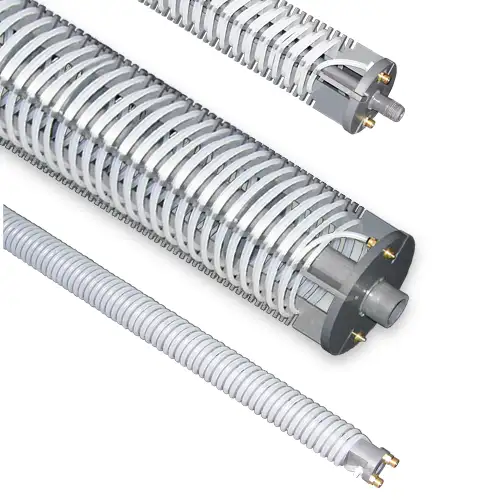
Enhanced Bioremediation
The Waterloo Emitter™is a simple, low cost device designed for the bioremediation of contaminated groundwater. It enables oxygen or other amendments to diffuse through silicone or LDPE tubing in a controlled, uniform manner. Ideal for aerobic bioremediation of MTBE and BTEX, with minimal maintenance required.
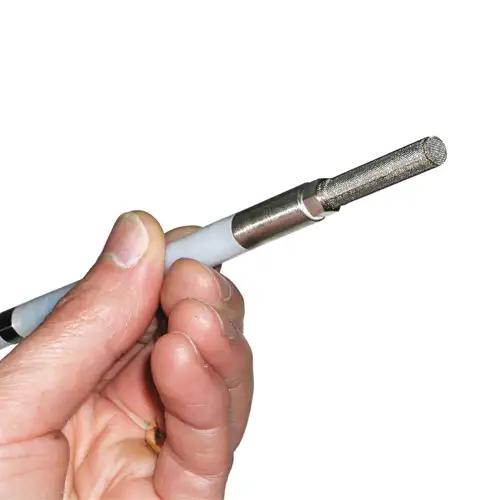
3/8" Diameter Flexible Pneumatic Pump
The Micro Double Valve Pump has a remarkably small and flexible design. At 3/8" (10 mm) diameter it is small enough to sample groundwater from channels of a CMT System.
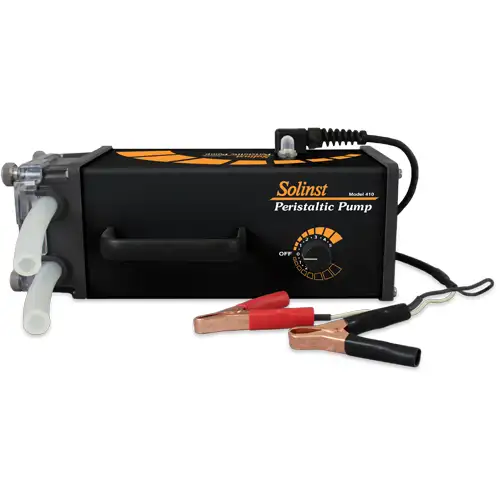
Rugged Peristaltic Pump
Compact, lightweight, and water-resistant, the Solinst Peristaltic Pump is designed for field use. One easy-access control allows various speeds and reversible flow. Ideal for shallow water and vapor sampling.
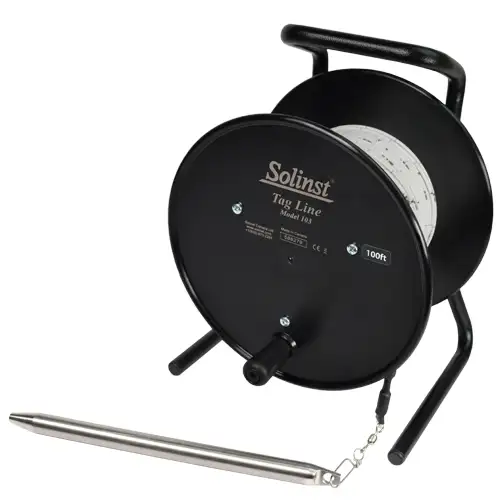
Tag Line - Rugged, Simple, Convenient
The Tag Line uses a weight attached to laser marked cable, mounted on a sturdy reel. Convenient for measuring depths during monitoring well construction.


