
Solinst Flute Blank Liners Datasheet

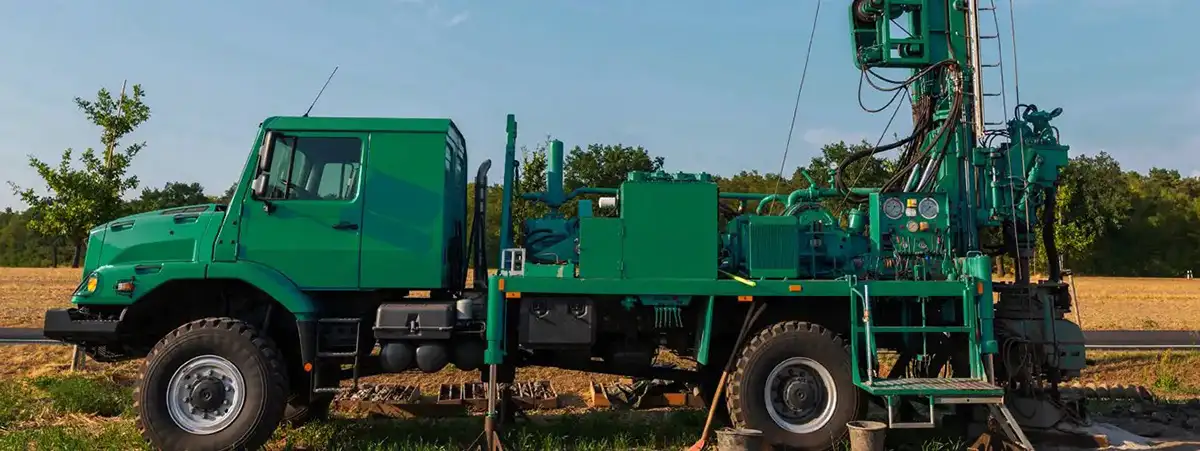
Solinst Flute Blank Liners
Model 405
The Solinst Flute Blank Liner is a fully removable solution designed to seal fracture flows in open boreholes, helping to
prevent cross-contamination.
Traditionally, a borehole remains open between the drilling phase and downhole characterization for extended periods. By sealing the borehole with a Blank Liner immediately after drilling, the movement of formation water is effectively halted.
Solinst Flute Blank Liners are flexible sleeves made from impermeable nylon fabric, closed at one end. When installed
and pressurized with air, water, or mud, the liners seal tightly to the interior of a borehole.
Blank Liners are available in various fabric strengths and diameters, ranging from 2″ to over 19″ (50 mm to over 48 cm). They can be installed in through eversion in open bedrock boreholes, as well as the overburden in cased holes. Blank Liners have been installed to depths of 425 m (1400 ft).
Advantages of Flute Blank Liners
- Provides a continuous seal for boreholes and prevents the migration of formation fluids
- Ensures that boreholes are not left open, thus avoiding cross-contamination
- No sealing grouts or bentonite seals are needed
- Supports borehole walls against slough and collapse
- Can be installed quickly in less than a day
- Custom-fabricated to meet the demands of various diameters and materials for a wide range of applications
- Capable of propagating through complex passages of varying diameters that are inaccessible to rigid piping or push rods
Sealing a Borehole with Solinst Flute Blank Liners
The end of the liner is pulled off of the shipping reel and folded inside out forming an annular pocket. This annular pocket is then lowered down inside the casing and secured at the surface. Water is then added to the pocket to a level above the water table in the formation, creating the driving pressure necessary to start the eversion process.
The driving pressure (typically 5 to 10 feet of water pressure) allows the liner to propagate down the borehole (eversion), displacing the borehole water into open flow paths and seals the liner firmly to the borehole wall.
For high head or artesian conditions, differential pressure can be achieved by the addition of higher density grout to the interior of the liner.
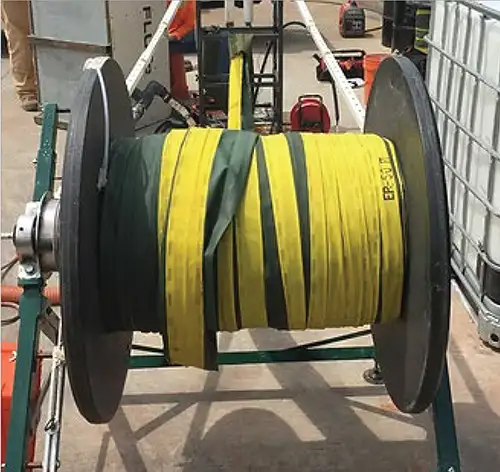
Solinst Flute Blank Liner on Shipping Reel
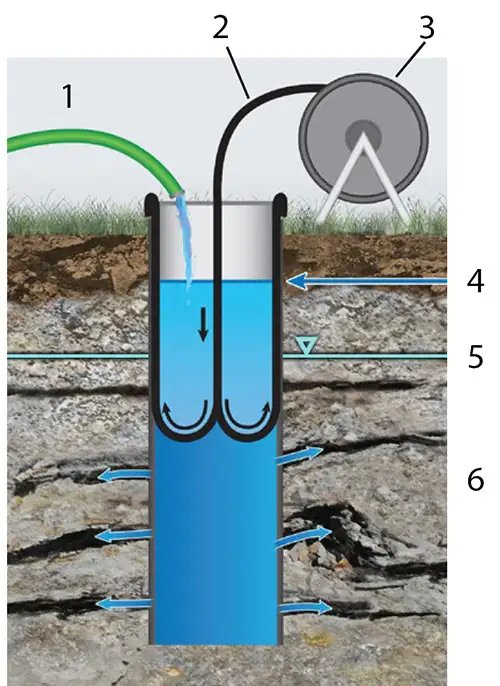
Blank Liner Installation (Figure 1)
- Water Hose
- Blank Liner
- Blank Liner on Reel (Inside Out)
- Water Level Inside Blank Liner
- Static Water Level
- Groundwater in hole pushed into formation, or removed by pumping
Why Seal a Borehole with a Solinst Flute Blank Liner?
Sealing a borehole after drilling prevents cross contamination. With traditional practice, the borehole is either left open for extended periods of time, or packer testing is conducted with large portions of the borehole are left unsealed. During this time,contamination from one fracture can mobilize vertically within the borehole, adhere to the borehole pore space and flow into other fractures. The following diagrams show how cross connection occurs:
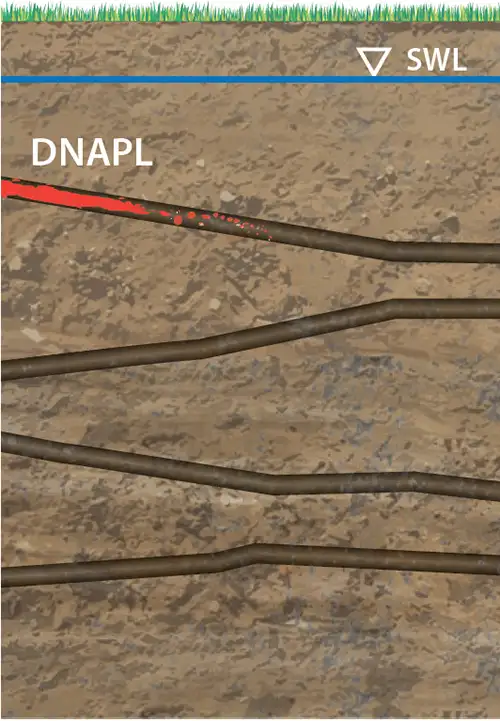
DNAPL Confined to an Isolated Fracture
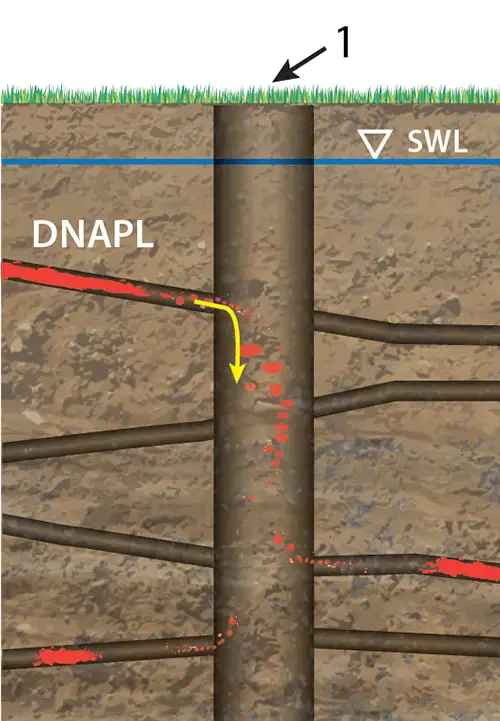
1. New Open Borehole
DNAPL Spread to Other Fractures As a Result of the Newly Drilled Borehole Acting as a Flow Path Between Otherwise Unconnected Fractures
Additional Reasons to Install Blank Liners:
- The liner seals the entire borehole, as compared to multiple packers in boreholes. This is especially useful in karst formations.
- The flow in the formation is not perturbed by flow in the open hole. Therefore, measurements of various kinds, such as temperature distribution due to flow in the formation, are more realistic of the natural hydrologic state.
- Stabilizing boreholes. The borehole is not likely to collapse on geophysical sondes which can “see” through the thin liner such as sonic tele-viewer, radiation logs, induction coupled electric logs, radar, etc. can traverse the borehole without concern about collapse of the borehole on the instrument.
- Liners can prevent the loss of annular sealing grouts outside a casing emplaced in karst formations – a common problem with oil and gas casings.
Additional Solinst Flute Solutions Using Blank Liners
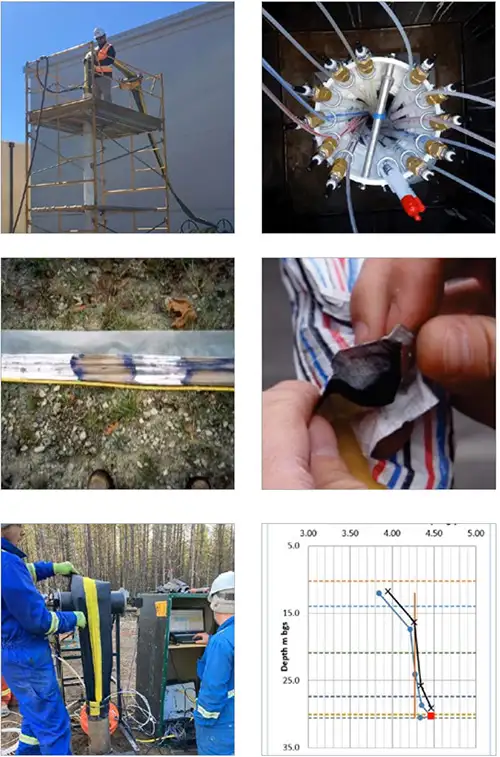
Obtain depth-discrete groundwater samples and head measurements from 15 or more zones in one borehole by installing a gas-driven pumping system with the liner with a sampling port at each defined interval. (See Model 405 Water Flute).
Map contaminant distribution in the pure phase (See Model 405 NAPL Flute) and dissolved phase (See Model 405 Flute FACT – Flute Activated Carbon Technique).
Quickly map borehole transmissivity and vertical head distributions while displacing the borehole water. This is equivalent to conducting packer testing on a 6” to 12” scale with higher resolution and no leakage or packer bypass issues. (See Model 405 Transmissivity Profiling and Reverse Head Profile).
With Flute liners, the borehole is either sealed while all downhole measurements are collected, or the liner sequentially seals off flow paths. In this way, the data integrity is very high as cross-contamination and cross-flow measurements cannot occur.
Related Products
Enhanced Bioremediation
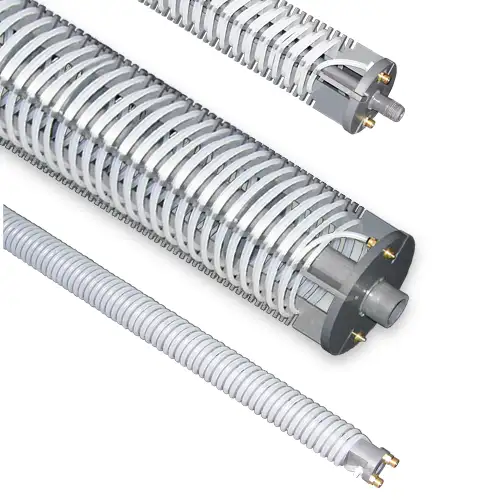
The Waterloo Emitter™is a simple, low cost device designed for the bioremediation of contaminated groundwater. It enables oxygen or other amendments to diffuse through silicone or LDPE tubing in a controlled, uniform manner. Ideal for aerobic bioremediation of MTBE and BTEX, with minimal maintenance required.
3/8" Diameter Flexible Pneumatic Pump
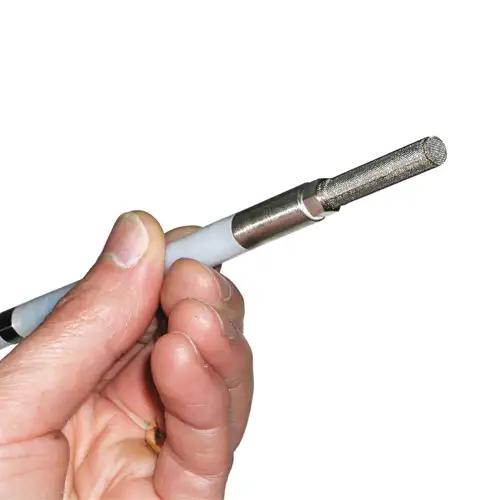
The Micro Double Valve Pump has a remarkably small and flexible design. At 3/8" (10 mm) diameter it is small enough to sample groundwater from channels of a CMT System.
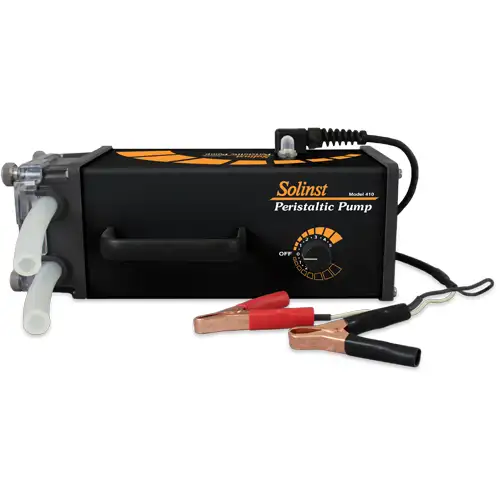
Rugged Peristaltic Pump
Compact, lightweight, and water-resistant, the Solinst Peristaltic Pump is designed for field use. One easy-access control allows various speeds and reversible flow. Ideal for shallow water and vapor sampling.
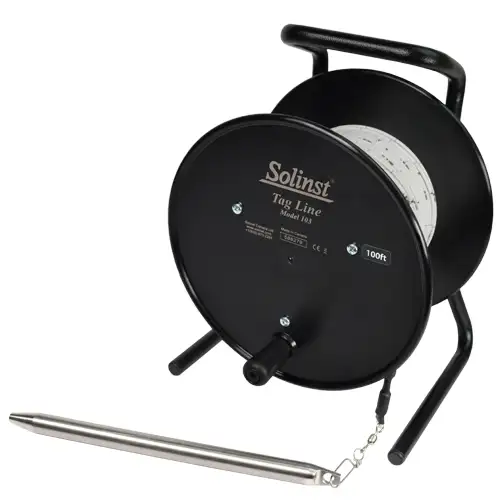
Tag Line - Rugged, Simple, Convenient
The Tag Line uses a weight attached to laser marked cable, mounted on a sturdy reel. Convenient for measuring depths during monitoring well construction.


