
405 Transmissivity Profiling Datasheet

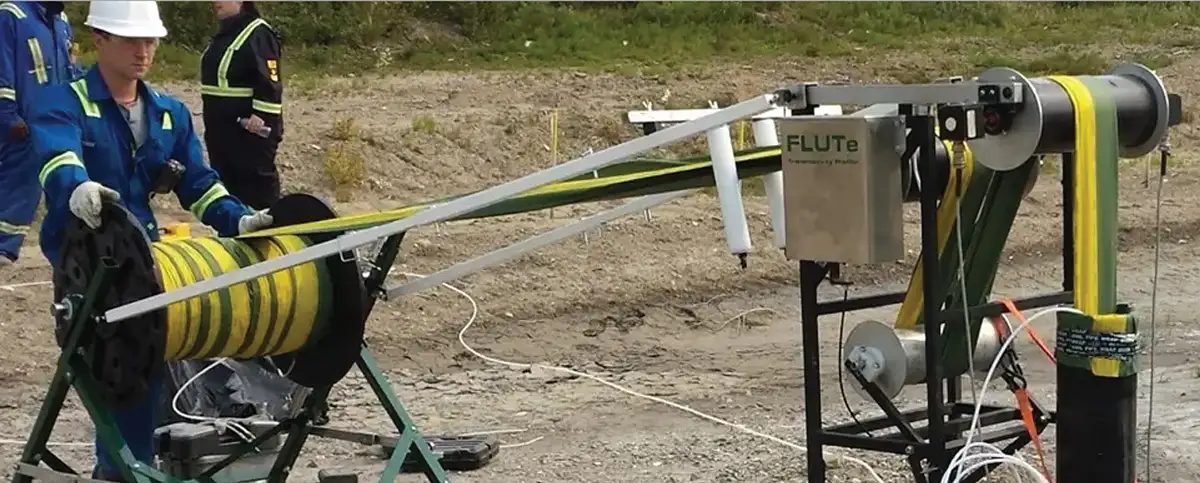
Transmissivity Profiling
Model 405
The Solinst Flute Transmissivity Profiling service rapidly measures all significant flow paths in a borehole with a resolution of 6″ to 12″ (15 cm to 30 cm), typically within one day.
Transmissivity Profiling is done as a Solinst Flute Blank Liner is installed down a borehole. The Solinst Flute Blank Liner is a fully removable solution designed to seal open boreholes. See the Model 405 Blank Liner Data Sheet for more information.
Solinst Flute has performed hundreds of Transmissivity Profiles in boreholes to 1000 ft (300 m) depths with 3″ to 12″ (7.6 cm
to 30 cm) diameters.
The direct measurement of flow paths using the Transmissivity Profiling technique may reduce the need for geophysical
measurements, which are used to deduce possible flow path locations in a borehole.
In addition, the installation of a Blank Liner provides the advantage of sealing the borehole against vertical contaminant migration or cross-contamination.
Figure 1. Transmissivity Profiling Setup
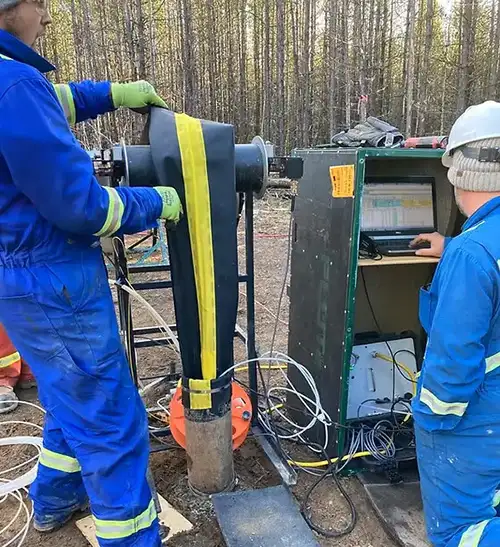
Technicians Monitoring Transmissivity Profiling Data
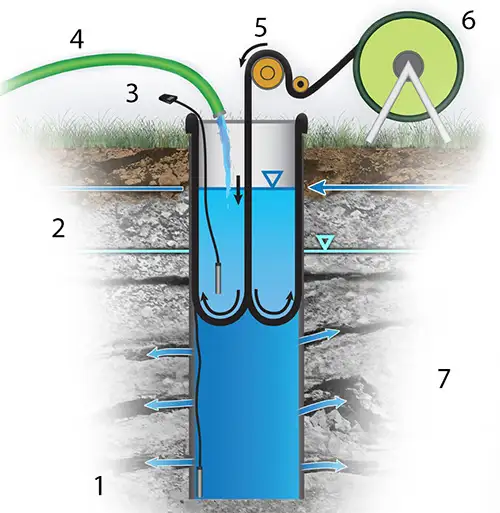
Figure 1: Transmissivity Profiling Setup
- Optional transducer
- ΔHL
- Liner head measurement
- Water Addtion hose
- Velocity Meter
- Liner on reel (inside out)
- Original water in hold pushed into formation
How Does Transmissivity Profiling Work?
As a Solinst Flute Blank Liner is installed and everts down the borehole, the water in the borehole is forced into the formation by whatever flow paths are available (e.g. fractures, permeable beds, solution channels, etc.). Figure 1 illustrates a simple everting liner equipped with three additional features: (1) the Flute Profiler (a velocity meter) located at the wellhead, which measures the liner’s velocity along with other parameters that can influence the descent speed; (2) a pressure transducer that measures the excess head in the liner, which drives the liner downward; and (3) another pressure transducer that measures the head beneath the liner. These instruments work together to monitor all factors affecting the eversion rate of the liner.
Liner Velocity Down Borehole
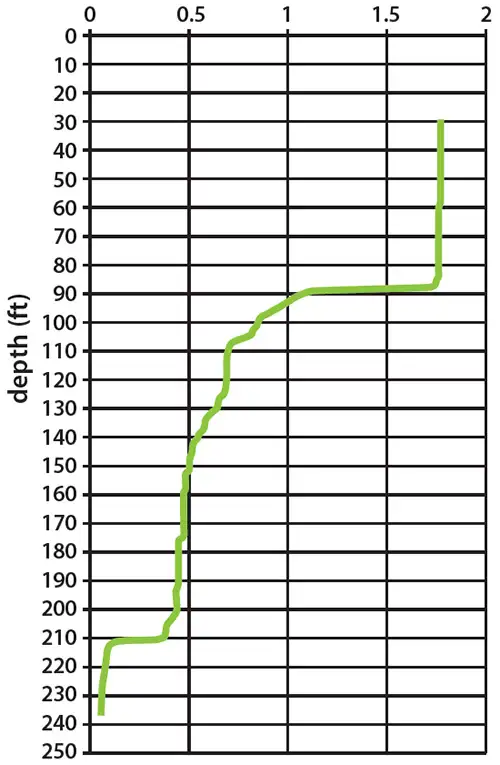
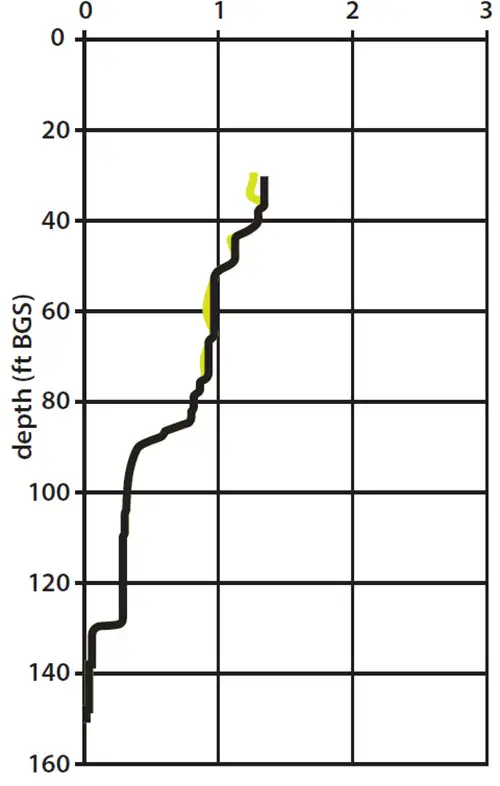
Figure 2: Velocity Profile
Measuring the Flow Paths from Boreholes
The descent rate of the liner, as measured by the Flute Profiler, is influenced by the rate at which water flows from the borehole through the flow paths.
The everting liner functions similarly to a perfectly fitting piston moving down the hole, but instead of sliding, it grows in length at the bottom end where the “eversion point” is located. As the liner everts, it progressively covers the flow paths.
When the liner starts its descent into the hole, all the flow paths are open, resulting in the highest descent rate. However, as the liner seals off the flow paths, the water displacement rate from the borehole decreases, which in turn reduces the liner’s descent rate.
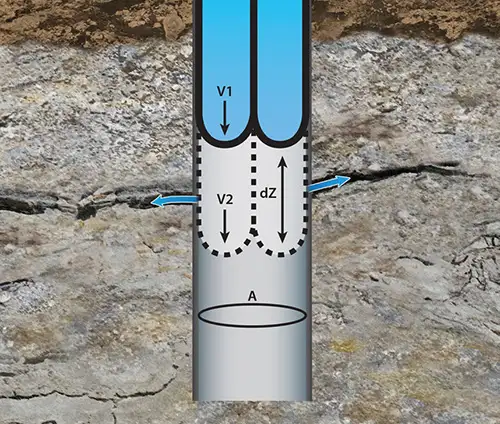
Flow Rate in Borehole (q) = A*(V1-V2)
Figure 3.
Calculation of the flow rate (Q)
from the velocity change of the liner
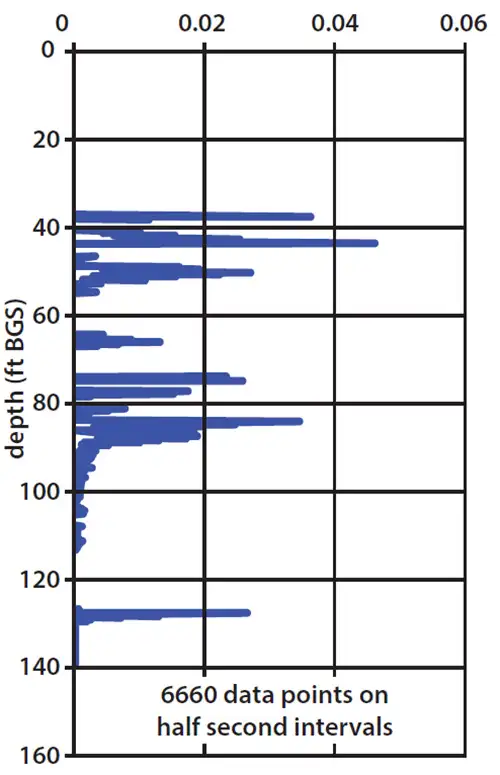
A monotonically fitted velocity profile is generated, illustrating changes in the liner’s descent velocity at different depths (see Figure 2). By multiplying this velocity by the borehole’s crosssectional area – refined using a caliper log – the flow rate of the borehole for each interval can be determined (see Figure 3).
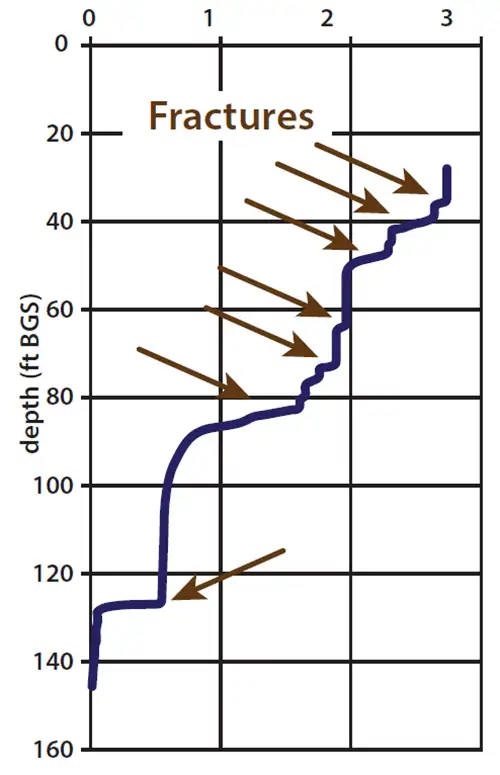
At the beginning of the profile, the calculated flow rate pertains to the entire borehole. As the liner seals off flow paths, the borehole flow rate is reduced. The depths in the borehole where a reduction in flow rate occurs indicate the locations of the flow paths, and the extent of this reduction serves as a measure of the flow rate. By analyzing the flow rate profile, a transmissivity profile for the borehole is calculated using the Thiem equation (see Figure 4).
Figure 4 Flow Rate Profile and Transmissivity Profiles
Flow Rate with Depth
(gal/m)
Transmissivity
(cm²/s)
Transmissivity with Depth
(cm²/s)
Transmissivity of 1 Foot Intervals
(cm²/s)
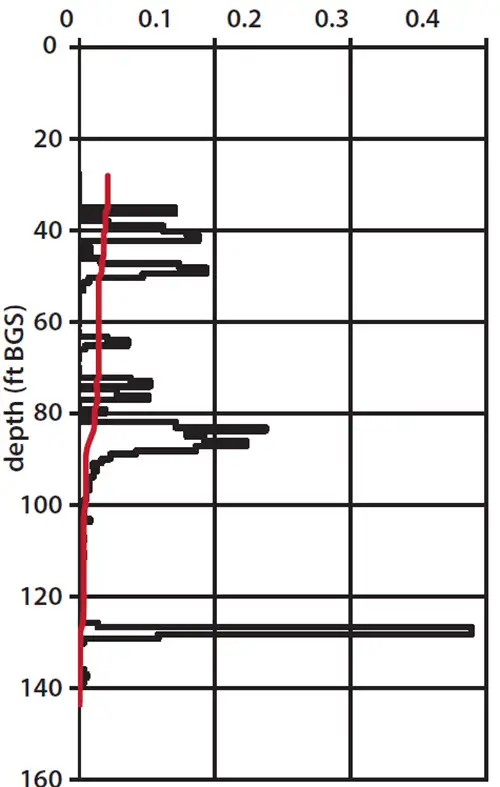
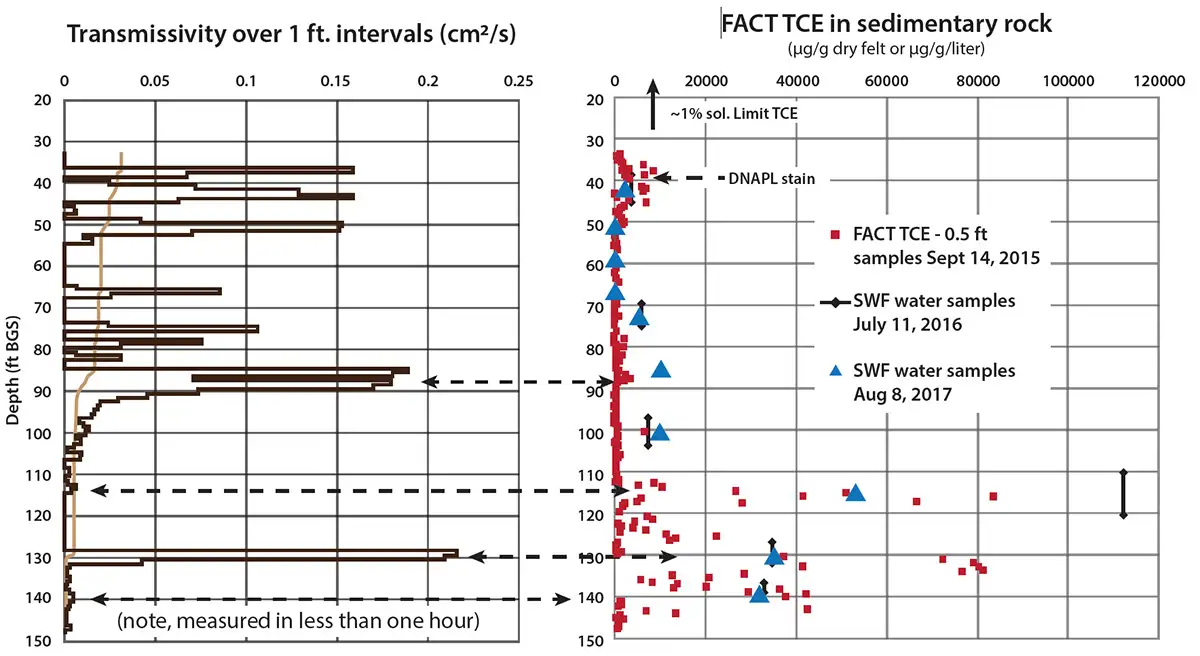
Figure 5. Transmissivity Profile and FACT data.
Note:
The high TCE concentrations at 112’ and 140’ BGS in very low transmissive fractures compared to low TCE concentrations in high flowing fractures at 90’ and 130’. The TCE concentrations at 140’ and 112’ are the same or twice as high, respectively, as the highest flowing fracture in the borehole at 130’ despite the fact that they are two of the lowest flowing fractures in the borehole. This data emphasizes the need for high resolution methods rather than coarse measurements, to assure that all significant contaminant source zones are properly identified during characterization. Water Samples (green diamonds), validate the FACT concentrations.
Mapping Contaminant Distribution
When combined with the FACT (Flute Activated Carbon Technique), the contaminant distribution can be mapped using the same Solinst Flute Blank Liner (see Figure 5).
This data can be used with the Transmissivity Profile to develop a fate/transport conceptual site model and design a multilevel sampling system, such as the Water Flute. See the Model 405 FACT and Water Flute Data Sheets for more information.
Reverse Head Profiling
Given the continuous Transmissivity Profile, the Reverse Head Profile can be determined by removing the Blank Liner
in a stepwise fashion using a technique described in the Model 405 Reverse Head Profiling Data Sheet.
Related Products
Enhanced Bioremediation
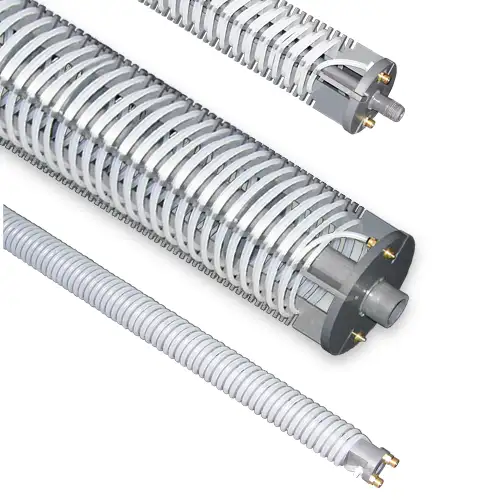
The Waterloo Emitter™is a simple, low cost device designed for the bioremediation of contaminated groundwater. It enables oxygen or other amendments to diffuse through silicone or LDPE tubing in a controlled, uniform manner. Ideal for aerobic bioremediation of MTBE and BTEX, with minimal maintenance required.
3/8" Diameter Flexible Pneumatic Pump
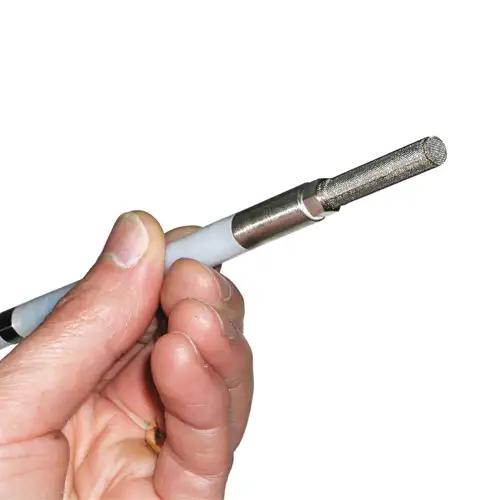
The Micro Double Valve Pump has a remarkably small and flexible design. At 3/8" (10 mm) diameter it is small enough to sample groundwater from channels of a CMT System.
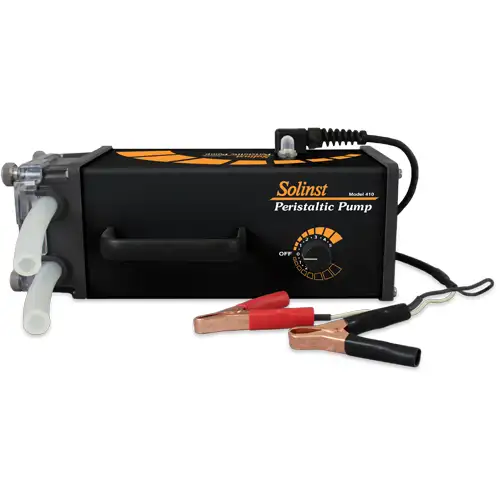
Rugged Peristaltic Pump
Compact, lightweight, and water-resistant, the Solinst Peristaltic Pump is designed for field use. One easy-access control allows various speeds and reversible flow. Ideal for shallow water and vapor sampling.
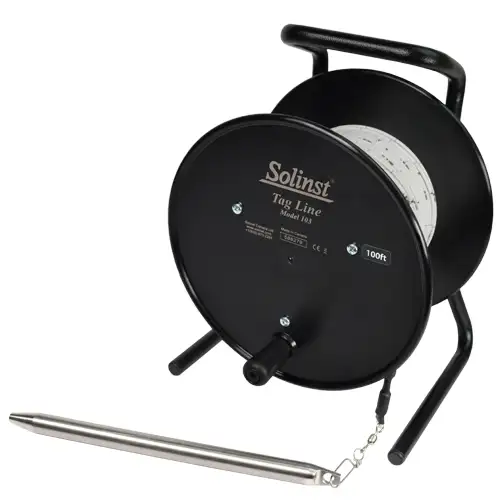
Tag Line - Rugged, Simple, Convenient
The Tag Line uses a weight attached to laser marked cable, mounted on a sturdy reel. Convenient for measuring depths during monitoring well construction.


