
405 Transmissivity Profiling FAQs: Frequently Asked Questions

Transmissivity Profiling Frequently Asked Questions: FAQs
Should the borehole be developed before a profile is performed?
Yes
Can anyone beside Solinst Flute perform the profiling measurement?
No. Only Solinst Flute personnel using the specialized equipment can perform the measurement.
Can a profile be done in a borehole with an oversized surface casing?
Yes
What are the results from a Solinst Flute Transmissivity profile?
The transmissivity distribution over the entire hole, the conductivity distribution in the hole, and with the liner left in place, the
seal of the borehole against cross connection.
What is the resolution of the Solinst Flute transmissivity profile?
About 1% of the transmissivity remaining below the descending liner at any depth in the hole is the limit of resolution. For that reason, the resolution in the bottom portion of the hole is better than in the upper portion of the hole. The quality of the data set varies and also therefore the resolution. If the vertical flow velocity in the borehole is very high (50-80 gal/min), the resolution is significantly lower until the highest flow zones are passed.
Will the profile identify aquitards?
Yes, especially if they are in the lower portion of the hole. However, the reverse head profile is better for aquitard identification.
If the blank liner cannot descend to the bottom of the hole in some cases, is that a problem?
When the measurement is terminated because the liner descent rate drops below 1/1000th of a foot per second, the final descent rate is used to calculate the remaining borehole transmissivity, however individual flow paths are not identified in that region.
What is the profile conductivity resolution?
If the transmissive region is in the non linear flow regime, the profiler data reduction, which assumes laminar flow, will under estimate the conductivity by perhaps a factor of 2-3. This is also true of the reduction of packer data.
Can one obtain water samples or head measurement while profiling?
No. That function is usually left to a Water Flute multi level sampling system which allows such measurements at any time after that system is installed and the hole is sealed over its entire length.
What is the advantage of the “trio”?
The typical open borehole time for cross connection is less than one day with the use of the three Solinst Flute methods in combination (the Solinst Flute Blank Liner, the Solinst Flute transmissivity Profile, and the Water Flute multi level sampling system). Other advantages are described at other web sites (e.g., FAQ about Water Flutes) and in the paper at GWMR Water Flute. A New Depth-Discrete Multilevel Monitoring Approach for Fractured Rock by John A. Cherry, Beth L. Parker, and Carl Keller (J.A. Cherry et al./ Ground Water Monitoring & Remediation 27, no. 2: 57–70)
How does the profile measurement compare in cost to straddle packer testing?
Straddle packer testing of the entire length of deep holes (>200 ft) in 5 ft intervals is much more expensive. The typical profile is done in 2-3 hours (sometimes much faster) with ~one foot resolution.
Can large diameter holes be profiled?
Yes, the hole size only affects the liner cost (~$2/ft for each 4 inch increment above 8 inches). The profiling cost is the same.
Are geophysical measurements needed if a profile has been done?
Confirmation of the high flow zones with a video or acoustic televiewer log is useful. A caliper log is also useful to confirm apparent borehole enlargements seen in the profile. The need for additional information depends upon the situation and the judgment of the parties involved.
Is a borehole velocity log also needed?
The velocity log is affected by both the gradient in the hole and the conductivity of the transmissive features. The FLUTE profile is a measure of the transmissivity relatively independent of any gradient in the borehole. If formation head differences are known (i.e., the natural formation head distribution), they can be used to adjust the liner transmissivity profile results. As a confirming measurement, a velocity log can be useful. It should agree with the liner profile. A reverse head profile after the T profile allows a direct comparison with a flow meter log.
Are straddle packer measurements necessary if a profile is done?
Generally, the profile will better identify the location of major flow paths. However, a straddle packer can better measure low flow zones in the upper portion of the borehole, if that is needed. Straddle packers can measure to lower conductivity levels than the liner measurement.
Does leakage occur past the liner as can occur for straddle packers in rough or highly fractured holes?
Generally, the liner profile is not affected by leakage, because the liner seals the entire upper portion of the hole and bypass is not a problem. Therefore, the liner profile method is much better suited for highly fractured holes.
Is the liner profile acceptable to the regulators in lieu of packer testing?
Yes, sometimes. Some regions of the EPA accept the liner measurement as sufficient with any other data available (e.g., cores collected). However, in some circles that is still a debate. It depends upon the objective of the measurements. As a new method (since 2004), the Solinst Flute profile is encumbered with the limitations of the earliest measurements. As refinements are made, the utility of the liner profile is increasing.
Does Solinst Flute rent or sell the profiling machine?
No
Is the profiling method patented?
Yes, in many countries.
Related Products
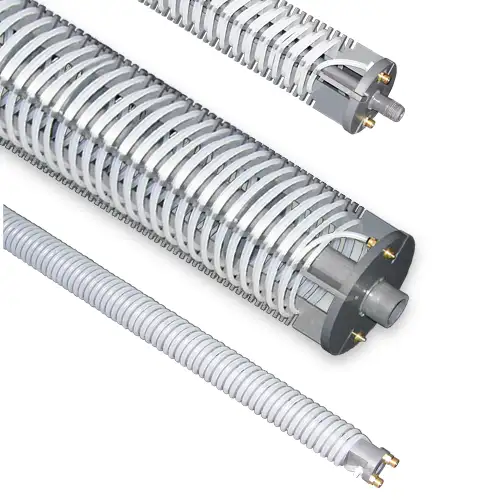
Enhanced Bioremediation
The Waterloo Emitter™is a simple, low cost device designed for the bioremediation of contaminated groundwater. It enables oxygen or other amendments to diffuse through silicone or LDPE tubing in a controlled, uniform manner. Ideal for aerobic bioremediation of MTBE and BTEX, with minimal maintenance required.
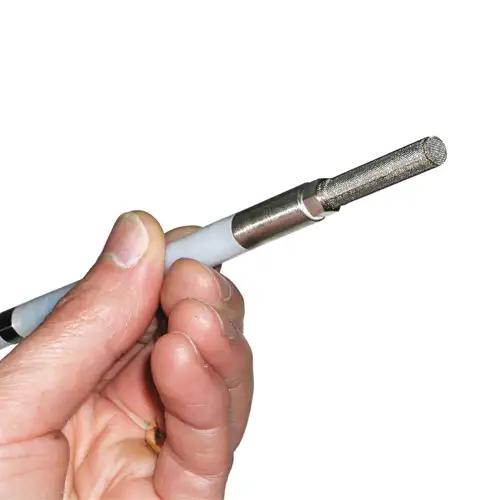
3/8" Diameter Flexible Pneumatic Pump
The Micro Double Valve Pump has a remarkably small and flexible design. At 3/8" (10 mm) diameter it is small enough to sample groundwater from channels of a CMT System.
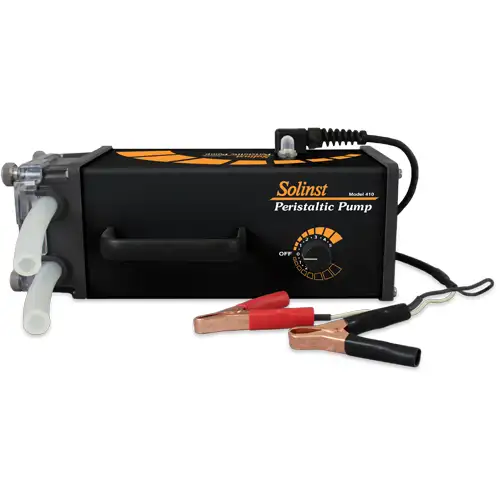
Rugged Peristaltic Pump
Compact, lightweight, and water-resistant, the Solinst Peristaltic Pump is designed for field use. One easy-access control allows various speeds and reversible flow. Ideal for shallow water and vapor sampling.
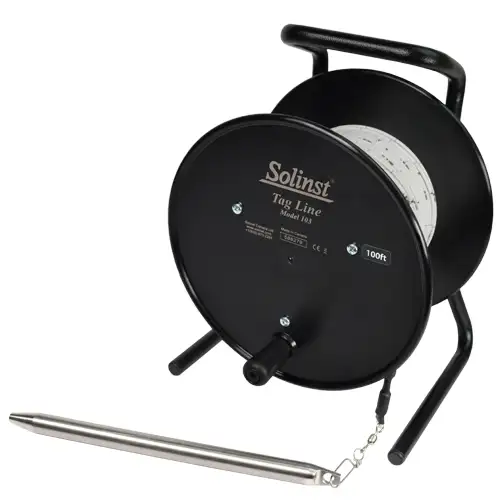
Tag Line - Rugged, Simple, Convenient
The Tag Line uses a weight attached to laser marked cable, mounted on a sturdy reel. Convenient for measuring depths during monitoring well construction.


