
The Cost of an Open Borehole

Why Every Borehole Should be Sealed the Day it’s Drilled
The Regulatory Position
ITRC (Fractured Rock, 2017): Prevention of vertical cross-contamination is an overarching principle of drilling; minimize the time a borehole acts as a vertical conduit. Fracturedrx-1.itrcweb.org/appendix-c-drilling
U.S. EPA (CLU-IN): Flexible liners and packers are identified as tools to prevent or minimize the creation of new contaminant pathways. clu-in.org/issues/Fractured Rock
New Jersey (N.J.A.C. 7:9D): Well construction rules require borehole portions not completed as wells to be decommissioned and sealed;
the NJDEP Field Sampling Procedures Manual (2024) governs monitoring well practice. Dep.nj.gov/srp/guidance/fspm
New York (NYSDEC CP-43): Unsealed and improperly abandoned wells are “pollution conduits” and a serious environmental liability.
The National Academies (2015): Recommend isolating borehole intervals with packers or flexible liners to prevent contaminant migration and geochemical mixing. Nationalacademies.org/read/21742
The Problem: an Open Borehole is an Active Contaminant Pathway
An open bedrock borehole hydraulically connects fracture zones. ITRC’s (Interstate technology & Regulatory Council) Fractured Rock guidance calls this “an unnatural condition” in which water and contaminants can flow vertically downward, spreading contamination and making characterization and remediation more difficult. Much of the damage occurs in days, not months, and much of it is irreversible due to matrix diffusion.
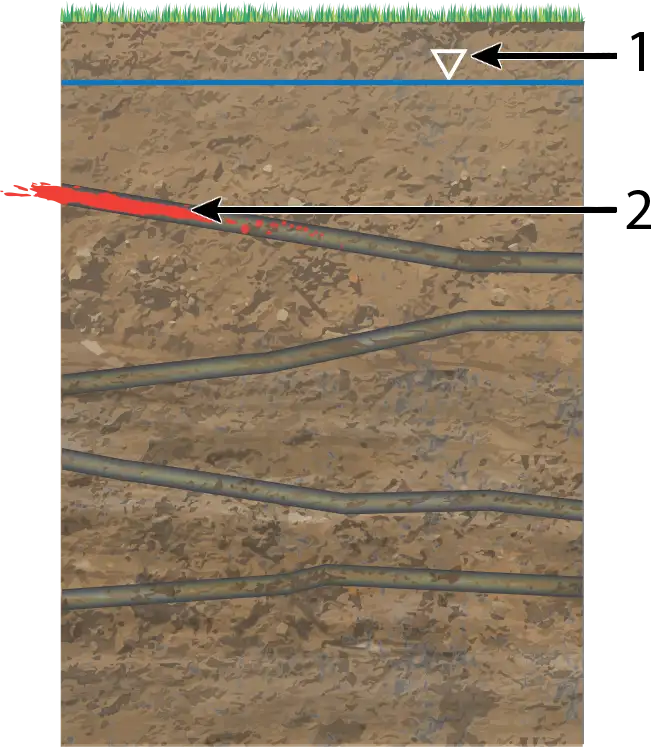
Contaminants confined
to an isolated fracture
- SWL
- DNAPL
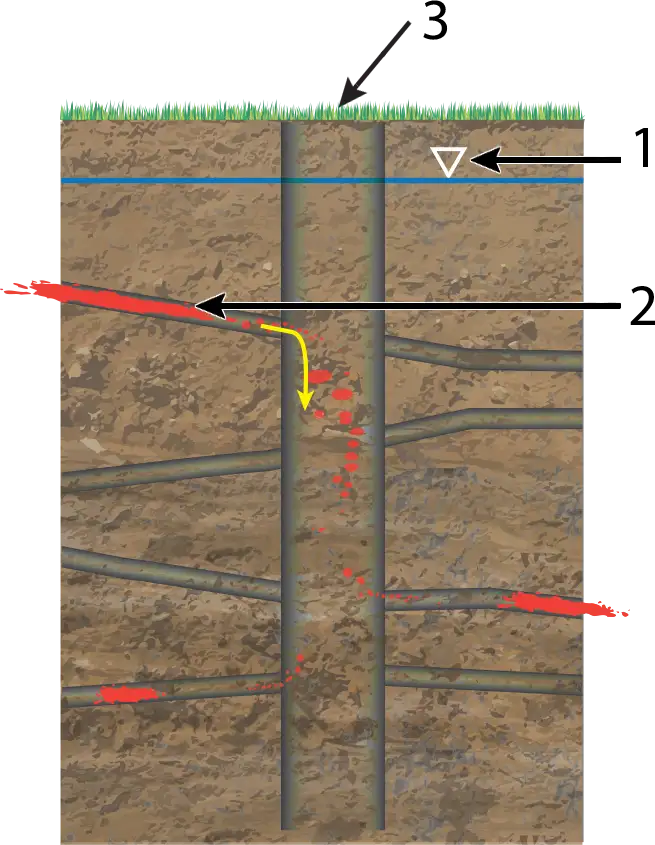
Contaminants spread to other fractures
as a result of the newly drilled borehole
- SWL
- DNAPL
- New open borehole
The Evidence: 3 Days Open, Up to a Year of Corrupted Data
Sterling et al. (2005), Ground Water, describe a cored borehole through a TCE plume in fractured sandstone with deep concentrations of 2,100–33,000 µg/L at 89–100m. Rock core analysis showed that nearly all of this deep contamination resulted from downward flow during only a few days of open-hole conditions before instrumentation. The U.S. National Academies’ fractured rock report cites this study and notes that previously clean fractures remained contaminated for up to one year.

- Day 0: Hole Drilled – Fractures connected
- Days 1-3: Vertical cross-flow – Contaminants move down
- Weeks: Matrix Diffusion – Mass enters rock
- Forever: Irreversible – Site model corrupted
Sterling et al. (2005): nearly all deep contamination set during the open-hole window, not after
Implications for the Consultant:
- Cross-contaminated data can corrupt the conceptual site model and trigger unnecessary deep investigation or remediation.
- A borehole that spreads shallow contamination deeper creates liability from the investigation itself.
- Open-hole geophysical and hydraulic data can be compromised by ambient vertical flow (Pehme et al., 2007, GWMR 27(2):57–70).
The Solution: The Blank Liner
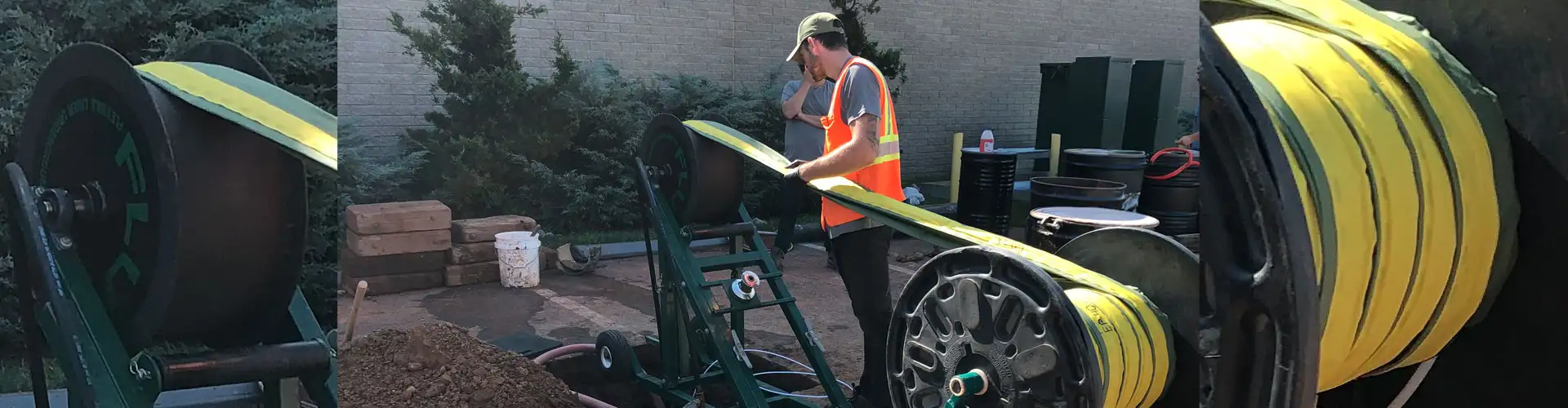
A urethane-coated nylon liner, custom-sized to the borehole, is everted under water head to seal the entire hole the same day it is drilled (Cherry, Parker & Keller, 2007, GWMR). The water-filled liner conforms to the borehole wall, sealing fractures and cavities more completely than conventional packers.
- Immediate protection: eliminates vertical cross-connection from day one—the window where Sterling describes where problems occur.
- Fully removable: unlike grout, the liner inverts out, preserving the borehole for geophysics or conversion to a multilevel system.
- Working seal: supports transmissivity profiling during installation, temperature logging under sealed (natural-gradient) conditions, and NAPL mapping with reactive covers—the seal generates data while it protects.
- Regulatory alignment: directly satisfies ITRC/EPA expectations to minimize open-hole time at fractured rock sites.
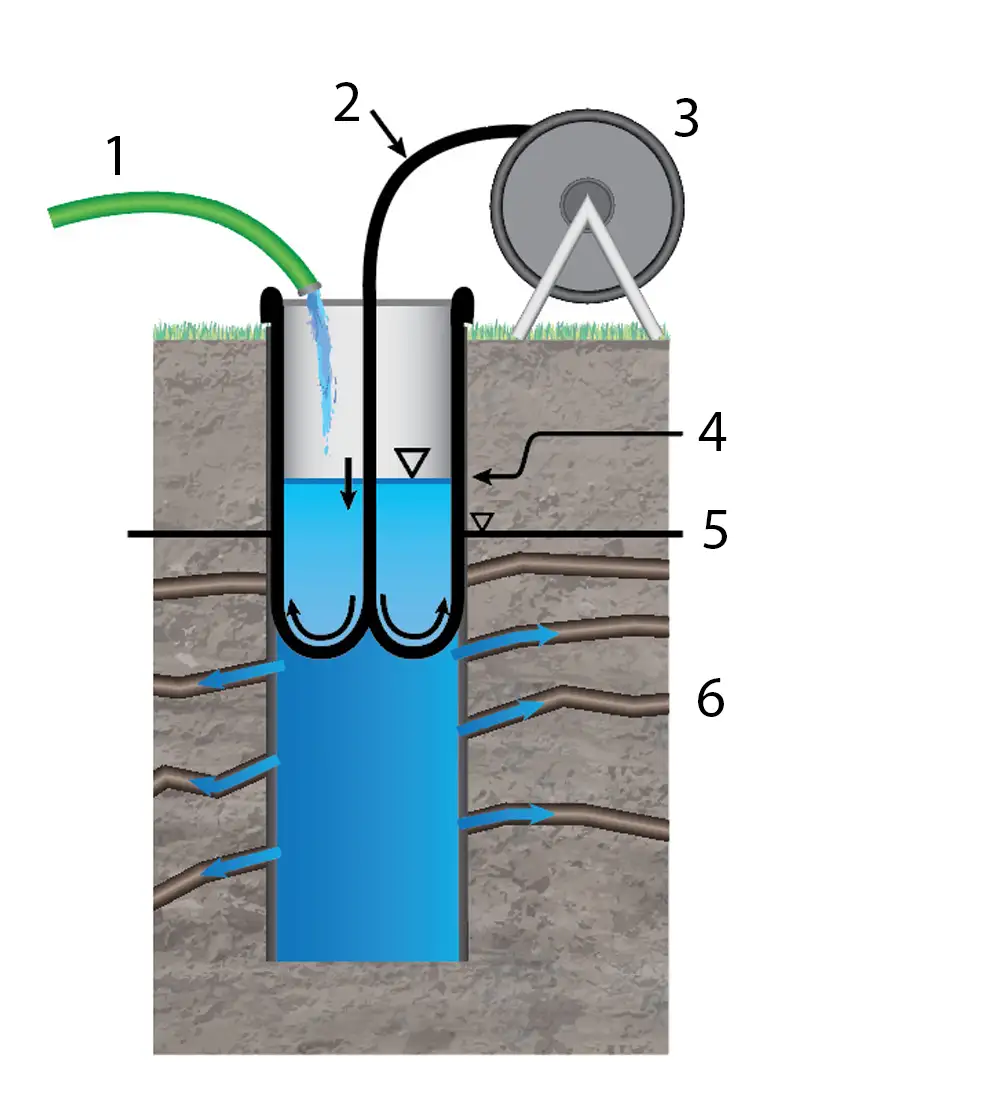
- Water hose
- Flute liner
- Liner on reel (inside out)
- Water level in liner
- Static water level
- Groundwater in hole pushed into formation, or removed by pumping
Bottom Line
A Blank Liner costs a fraction of one redrilled borehole or one round of disputed analytical data. Sealing on the day of drilling is the cheapest insurance against self-inflicted cross-contamination. The Regulators have already made the argument for you.
Key references: Sterling, Parker, Cherry et al. (2005) Ground Water 43(4) — pubmed 16029181; Cherry, Parker & Keller (2007) GWMR 27(2); Pehme et al. (2007) GWMR 27(2):57–70; ITRC FracRx-1 (2017); NRC/NASEM (2015).
Related Products
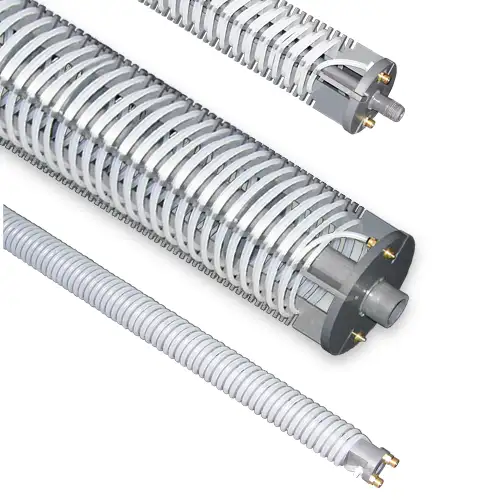
Enhanced Bioremediation
The Waterloo Emitter™is a simple, low cost device designed for the bioremediation of contaminated groundwater. It enables oxygen or other amendments to diffuse through silicone or LDPE tubing in a controlled, uniform manner. Ideal for aerobic bioremediation of MTBE and BTEX, with minimal maintenance required.
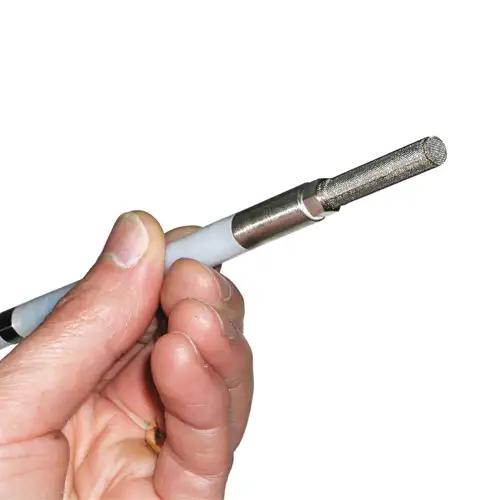
3/8" Diameter Flexible Pneumatic Pump
The Micro Double Valve Pump has a remarkably small and flexible design. At 3/8" (10 mm) diameter it is small enough to sample groundwater from channels of a CMT System.
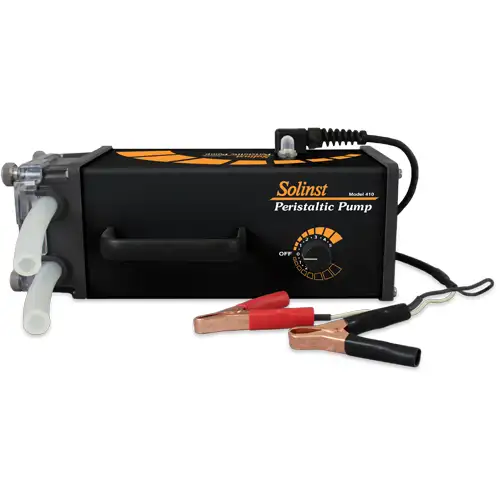
Rugged Peristaltic Pump
Compact, lightweight, and water-resistant, the Solinst Peristaltic Pump is designed for field use. One easy-access control allows various speeds and reversible flow. Ideal for shallow water and vapor sampling.
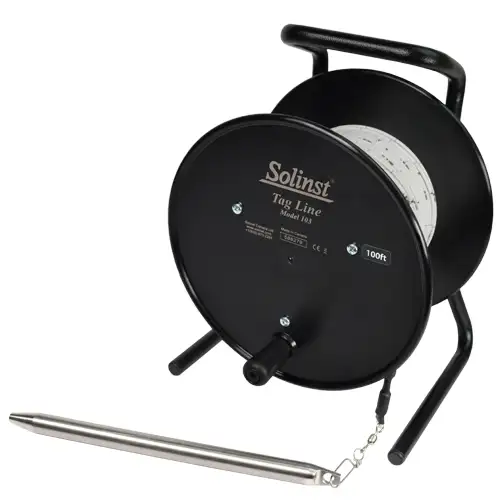
Tag Line - Rugged, Simple, Convenient
The Tag Line uses a weight attached to laser marked cable, mounted on a sturdy reel. Convenient for measuring depths during monitoring well construction.


