
Transmittance Sensor: Transmissometer

Solinst Eureka
2113 Wells Branch Pkwy, Suite 4400
Austin, TX, USA
78728
Tel: +1 512-302-4333
Fax: +1 512-251-6842
email: [email protected]
Optical Measurement of Water Clarity and Light Penetration
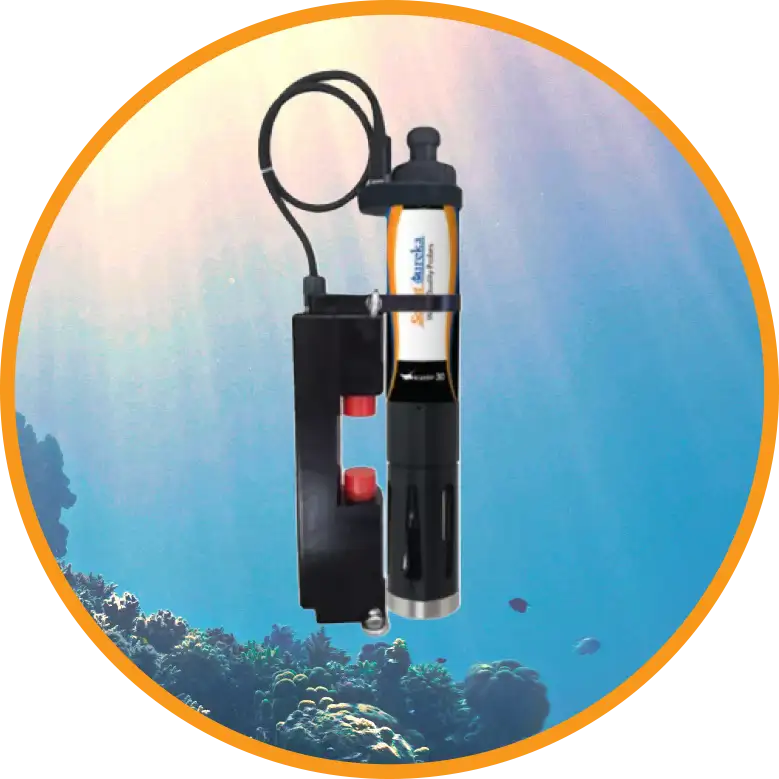
The Transmittance Sensor provides a direct measurement of optical transmittance by quantifying the amount of light transmitted through a fixed path of water, offering a reliable indication of water clarity, particulate presence, and dissolved matter.
The sensor measures the reduction of a controlled light beam across a fixed 10 cm optical path length. It delivers stable, high-resolution transmittance data for a wide range of environmental and process monitoring applications. Transmittance measurement is a direct, optical method for assessing water clarity. It complements and extends traditional turbidity monitoring methods.
Unlike indirect optical measurements, transmittance quantifies the actual loss of light due to absorption and scattering within the water column. This makes it particularly effective for detecting subtle changes in water quality, including fine particulates, biological activity, and early-stage fouling that may not be captured by traditional turbidity measurements.
Optimised for real-world environmental and process monitoring conditions, the Transmittance Sensor is designed for integration with multi-parameter water quality sondes. Its stable optical geometry and low-drift performance ensure consistent data collection in groundwater, surface water, and industrial environments, which may all be affected by fouling and changing water conditions.
Transmittance Measurement Principle
The Transmittance Sensor operates by projecting a controlled light beam across a fixed 10 cm optical path. It then measures the amount of light received at a detector on the opposite side. Two primary mechanisms reduce light as it travels through water:
- Absorption by dissolved substances
- Scattering caused by suspended particles
The sensor quantifies this reduction as a percentage of transmitted light relative to the original signal. Lower transmittance values indicate higher concentrations of particulates or dissolved materials. They can also suggest increased biological activity, which can affect light penetration.
By maintaining a stable optical geometry and a fixed path length, the Transmittance Sensor provides consistent, repeatable measurements that are not dependent solely on particle size distribution. This provides a more consistent, quantitative assessment of overall light attenuation than indirect optical methods.
Data Output and Interpretation
The Transmittance Sensor outputs the percentage of light transmitted through water over a defined optical path length. This direct measurement gives a clear, quantitative indication of water clarity and light attenuation. Typical outputs include:
- % Transmittance (%T)
- Relative light attenuation
- Trend data over time
Changes in transmittance can be interpreted as follows:
- Decreasing transmittance signals increased particulates, biological activity, or dissolved substances
- Increasing transmittance indicates improved clarity or reduced loading
Because transmittance captures both absorption and scattering effects, it provides a more complete picture of optical water quality. This is more informative than measurements based solely on scattered light.
When used alongside parameters such as turbidity, chlorophyll, and dissolved organic matter (CDOM), transmittance data provide additional context for interpreting optical and biological water quality conditions. Transmittance data can also be correlated with turbidity and other optical measurements to provide a more complete understanding of water quality conditions.
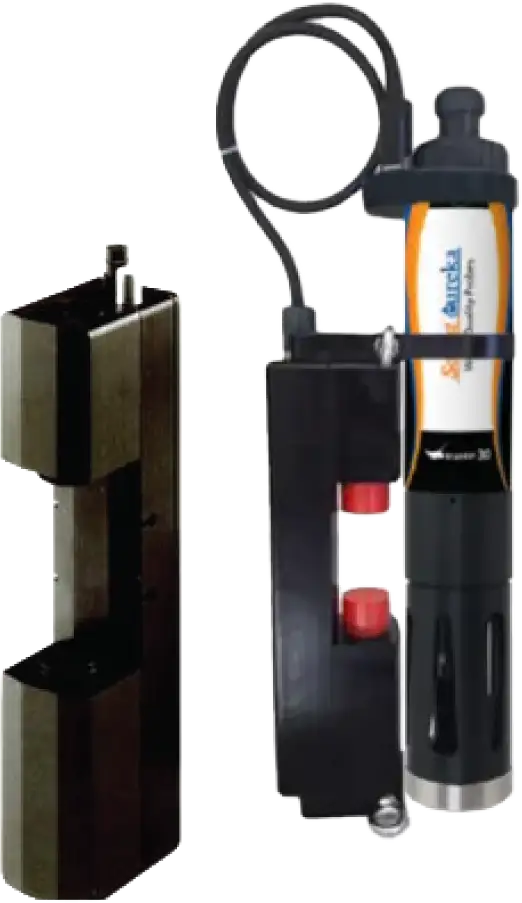
Key Features of the Transmittance Sensor:
- Direct optical transmittance measurement using a fixed 10 cm path length
- High sensitivity to fine particulates and dissolved optical constituents
- Balanced measurement range for variable water conditions
- Resistant to variable temperature, pressure, and water composition
- Stable optical geometry for consistent, repeatable results
- Low drift performance for long-term monitoring applications
- Robust, field-ready construction for environmental and process use
- Minimal maintenance requirements with periodic cleaning
- Integration with multi-parameter water quality sondes
- Supports real-time monitoring and logged data collection
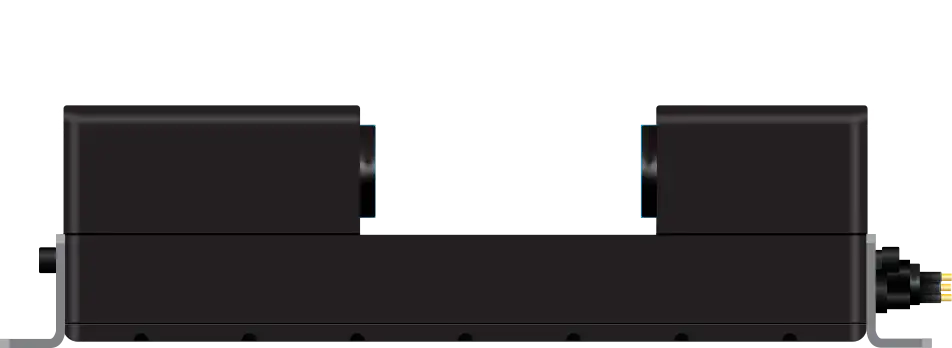
Transmittance Sensor Specifications
Why Measure Transmittance vs. Turbidity?
Both transmittance and turbidity are optical measurements for water quality, and understanding their differences is essential.
Turbidity sensors estimate water clarity by measuring scattered light, meaning the light that bounces off particles in water. This measurement is influenced by particle size, shape, and composition. While effective for general monitoring, turbidity can vary depending on the characteristics of suspended solids.
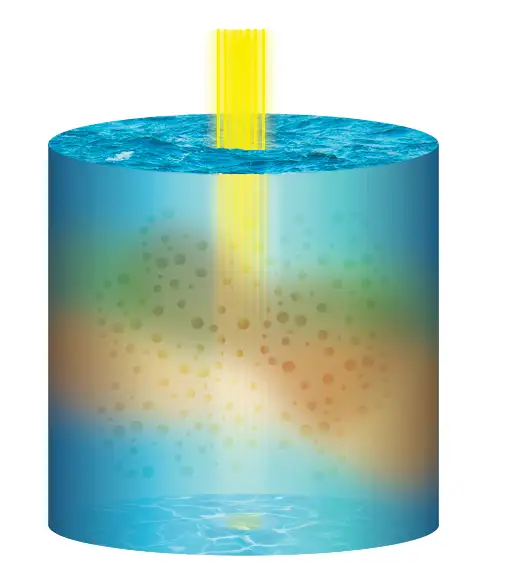
Transmittance measures light loss directly; turbidity infers it from scattered light.
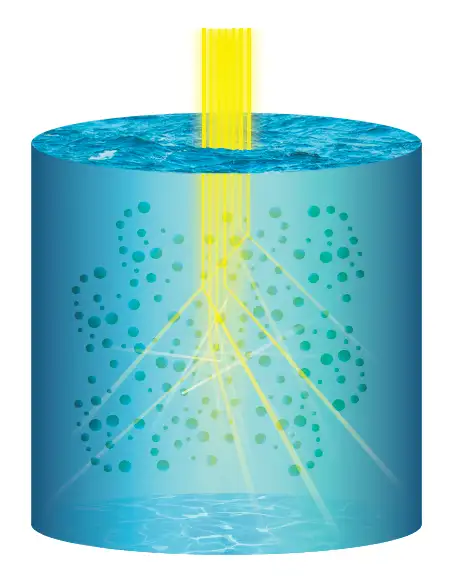
Turbidity infers it from scattered light.
Transmittance measures the amount of light that passes directly through the water over a defined path length. This provides a more consistent, quantitative assessment of light attenuation that captures the combined effects of absorption and scattering.
Key Differences:
Direct vs. indirect measurement: Transmittance measures light loss directly; turbidity infers it from scattered light.
Sensitivity to fine particles: Transmittance detects small particles and dissolved matter that turbidity misses
Consistency across conditions: Less affected by particle type, transmittance offers stable readings
Relevance to optical processes: Directly applicable to UV disinfection, light penetration studies, and optical system performance
For applications requiring a precise understanding of light availability in water—such as treatment optimisation, biological activity monitoring, or fouling detection—transmittance offers a more direct and reliable measurement than turbidity alone.
Integrated Water Quality Monitoring
The Transmittance Sensor is most effective when used as part of a multi-parameter monitoring approach.
When integrated with additional water quality sensors, transmittance data enhance interpretation by providing direct insight into light availability in the water column. Combine with sensors such as:
Turbidity Sensors: Complementary measurement of scattered light for a complete understanding of particulate conditions
Chlorophyll Sensors: Assess biological activity in relation to light availability
CDOM / fDOM Sensors: Identify dissolved organic matter that absorbs light
Dissolved Oxygen and Temperature Sensors: Provide supporting environmental context for interpreting water quality dynamics
This integrated approach improves detection, validation, and understanding of changing water conditions across environmental, treatment, and research applications.
Deployment and Integration
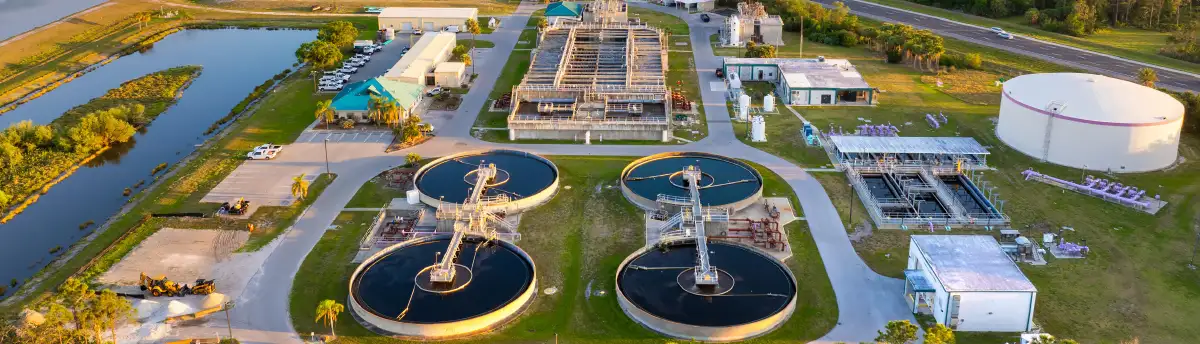
Integrate the Transmittance Sensor with Solinst Eureka multi-parameter water quality sondes for deployment across a range of monitoring environments, from field-based studies to fixed installations in treatment systems.
Deployment Options
- Fixed installation in pipes, tanks, or treatment systems
- Profiling and spot sampling in surface water bodies
- Long-term deployment at groundwater or environmental monitoring sites
System Integration
- Compatible with data logging systems for continuous monitoring
- Supports real-time data acquisition and remote telemetry
- System integration with SCADA, PLC, or environmental monitoring platforms
Data Collection
- Configurable sampling intervals
- Real-time data viewing
- Data logging for trend analysis and reporting

Where Transmittance Provides Added Value
Transmittance measurement is particularly valuable in applications where traditional turbidity measurements may not fully capture changes in water quality.
For example, transmittance enables:
- Detection of dissolved organic matter affecting light penetration
- Monitoring fine particulates below turbidity detection thresholds
- Evaluating optical conditions for biological and photochemical processes

Applications Suited to Transmittance Sensors
The Transmittance Sensor is used in a wide range of water quality monitoring applications where understanding light penetration, particulate presence, and optical clarity is critical. The 10 cm path length provides an effective balance between sensitivity and measurement range, making it well suited for environmental monitoring and process applications where water conditions may vary.
Environmental Monitoring
- Surface water quality assessment in lakes, rivers, and reservoirs
- Groundwater monitoring for dissolved and suspended contaminants
- Catchment and surface water runoff studies
- Coastal and estuarine light attenuation measurement
- Algae and biological activity detection through changes in light transmission
- Combined monitoring with turbidity, chlorophyll, and dissolved organic matter sensors for enhanced interpretation of optical water quality conditions
Drinking Water Treatment
- Filter performance monitoring and optimisation
- UV disinfection system validation (UV transmittance)
- Monitoring of UV transmittance (UVT) for regulatory and process control applications
- Early detection of particulate breakthrough
- Source water quality characterisation
Wastewater and Process Monitoring
- Effluent quality monitoring and compliance tracking
- Process water clarity in industrial systems
- Filtration and separation efficiency evaluation
- Detection of fouling in membranes and treatment systems
Research and Specialised Applications
- Optical water quality studies and light attenuation profiling
- Calibration support for optical sensors and instruments
- Aquatic ecosystem research requiring light availability measurements
- Laboratory and field-based water quality analysis

UV Transmittance (UVT) Monitoring
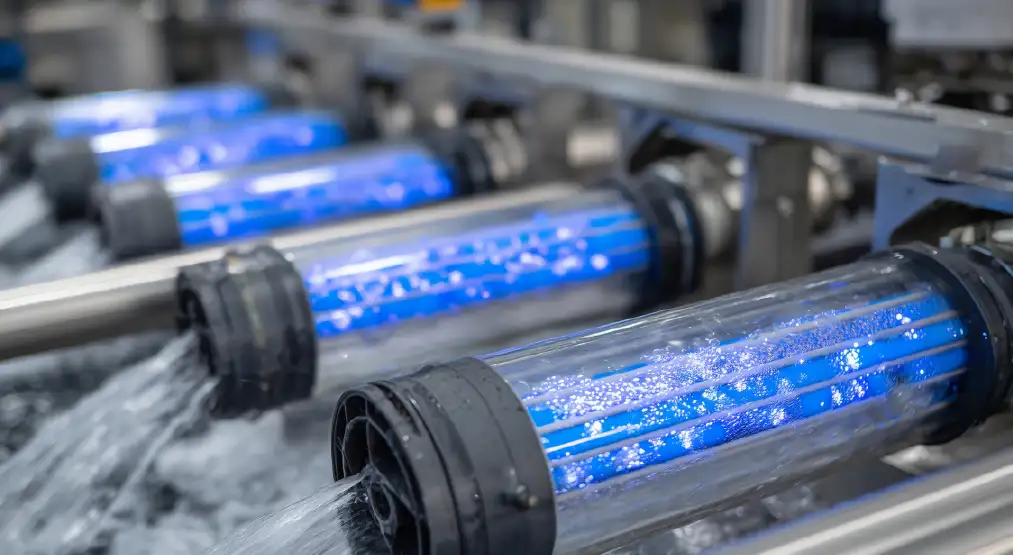
In UV disinfection applications, transmittance is a critical parameter that indicates how effectively ultraviolet light penetrates water.
UV Transmittance (UVT), typically measured at specific wavelengths such as 254 nm, is used to:
- Assess UV disinfection system effectiveness
- Monitor changes in source water quality
- Optimise treatment processes
- Detect fouling or organic loading
Lower UV transmittance values indicate reduced light penetration, which can impact disinfection performance and system efficiency. By providing direct insight into light availability, transmittance measurements support more accurate control and validation of UV-based treatment systems than indirect indicators.
Related Products
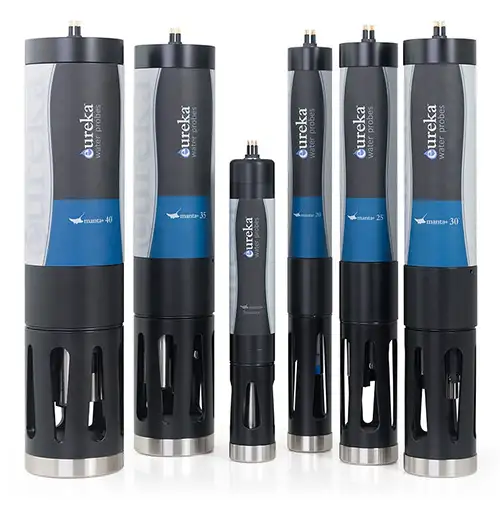
Manta Series Water Quality Probes
Solinst Eureka offers the largest selection of water quality sensor technologies in the industry. So in addition to standard configurations, each probe may be customised for your specific application. Pick sensors of your choice to fully populate larger probes, or add a battery pack to convert a probe to a logging device.
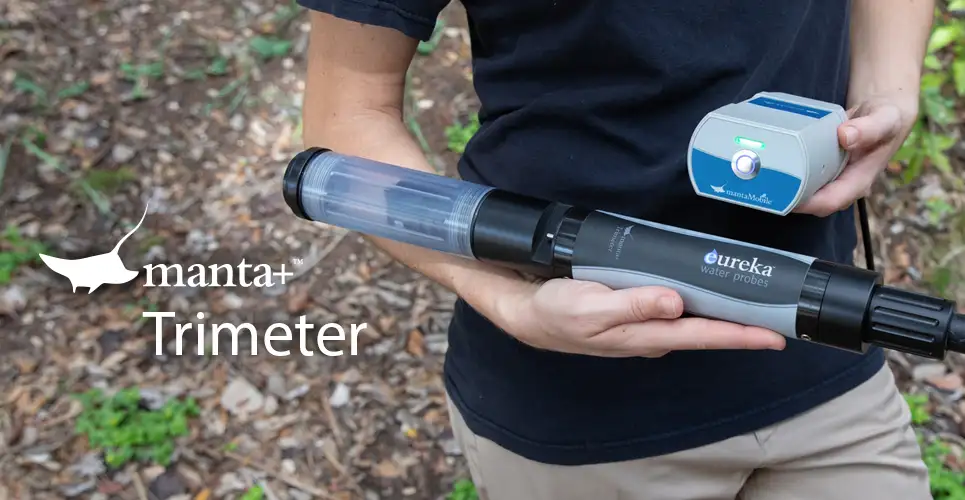
Manta Trimeter Water Quality Probe
The Trimeter holds any one sensor* from the Sensor Parameters list, plus temperature and depth sensors (both are optional). For example, a Trimeter configuration could be turbidity, temperature, and depth. Another example could be DO and temperature.
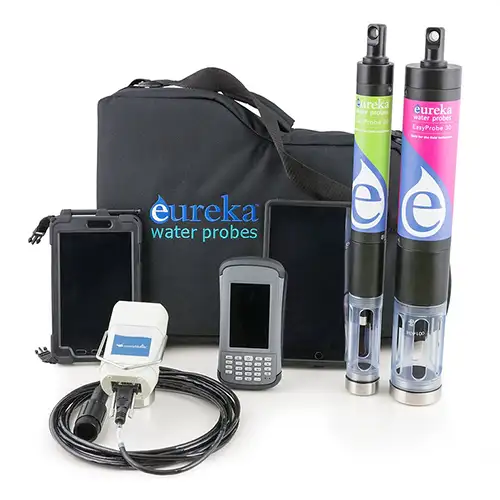
EasyProbe: Water Quality Sondes
The EasyProbe, by Solinst Eureka, is a high-performance, cost-effective water quality monitor. It's ideal for spot-checking, remote telemetry, education, research, aquaculture, and more. The EasyProbe20 includes sensors for temperature, dissolved oxygen, conductivity, and pH, while the EasyProbe30 adds a turbidity sensor. Eureka multiprobes are known for their reliability, with a three-year warranty covering all sensors, and have the lowest maintenance costs in the industry.
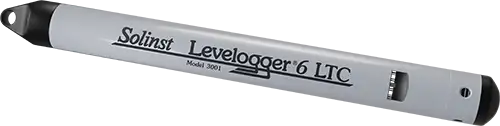
Water Level, Temperature & Conductivity Datalogging
The Levelogger 6 LTC measures and logs water level fluctuations, temperature, and conductivity. It is programmed to record at intervals as often as 2 seconds. It includes an 8-year battery, memory for 100,000 sets of readings, and comes in 6 pressure ranges. A PFAS-free coating (inside and out) provides superior corrosion and abrasion resistance.
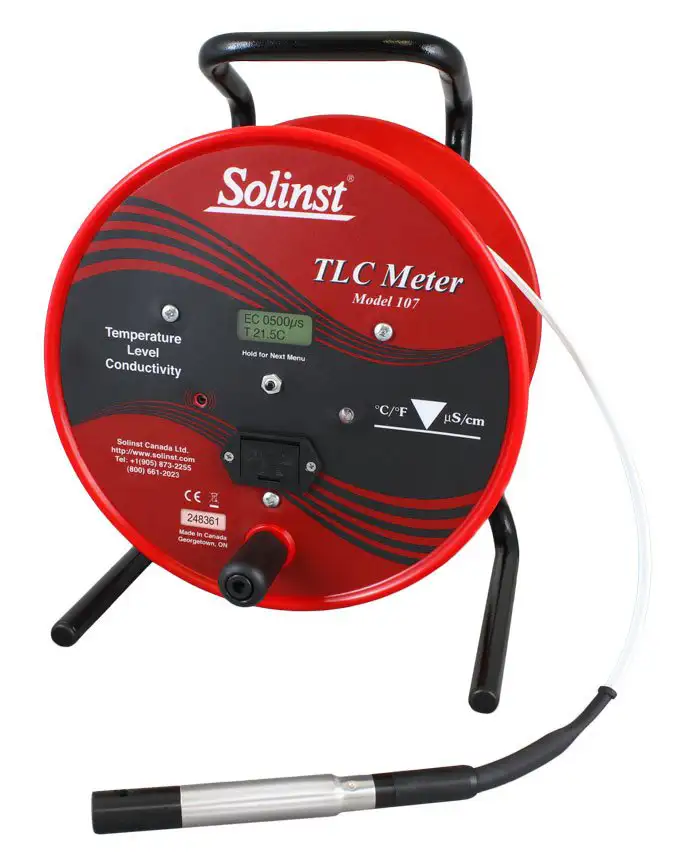
TLC Meter – Measure Accurate Temperature, Level & Conductivity
A TLC Meter provides accurate, stable temperature and conductivity measurements, displayed on a convenient LCD display for easy reading. Static water level and depth of readings are read off Solinst flat tape, which is precisely laser-marked every mm or 1/100 ft. Tape lengths are available to 300 m (1000 ft).


