
Solinst 101 P7 Water Level Meter Operating Instructions
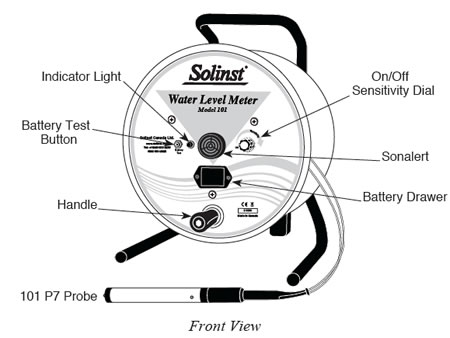
Equipment Check
- Turn sensitivity dial fully clockwise.
- Clockwise rotation of the sensitivity dial turns the meter on and increases sensitivity.
- Always set the switch to the highest sensitivity position, then decrease if necessary.
- Depress the Battery Test button to test the battery and main circuitry (does not test the tape or probe).
- Submerge the probe in tap water. This completes the circuit and activates the buzzer and light.
The Tape Guide
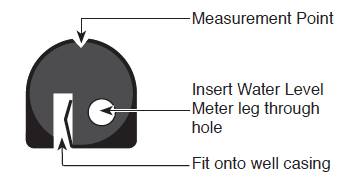
The Tape Guide has been designed to:
- Improve accuracy when reading water levels
- Easily obtain repeatable measurements
- Prevent the tape being cut by the well casing
- Allow the tape and probe to hang straight from the side of the well.
- Fit the small end of the Tape Guide onto the edge of well casing 2″ (50 mm) diameter or larger.
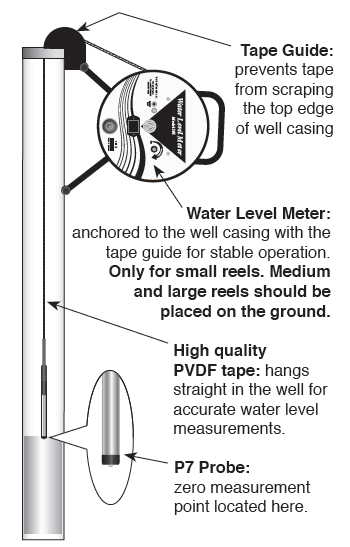
- For small reels only, insert the leg of the Water Level Meter into the hole on the Tape Guide and rest the Water Level Meter on the side of the well casing. (See diagram below).
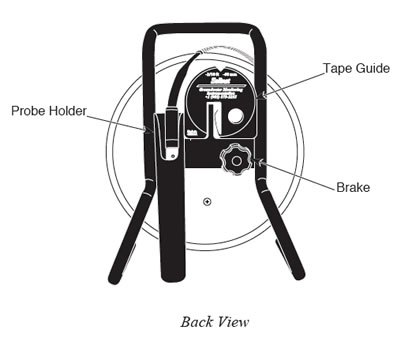
- To store the Tape Guide, simply clip it onto the support bracket located on the back of the Water Level Meter.
Water Level Measurements
- The 101 Water Level Meter P7 Probe zero measurement point is located near the tip of the probe.
- For ease of operation, the Tape Guide can be used to support the Water Level Meter. (See diagram above).
- Feed the tape into and out of the well using the groove in the top of the Tape Guide. The light and buzzer activate when the black Delrin tip is submerged and the zero point is reached. To ensure accuracy, lower and raise the probe a few times and then record the depth measurement from the tape at the top of the well.
- When using the Tape Guide, the measuring point is offset from the top of casing. To adjust your measurements to the top of the casing, simply subtract the amount indicated on the front of the Tape Guide (i.e. 6 cm or 0.2 ft).
Water Level Meter: Operating Instructions
Routine Care
- After the depth to water has been recorded, the tape should be carefully rewound onto the reel, the probe wiped dry and placed into the probe holder.
- The probe, tape and reel can be wiped clean with phosphate-free (non-abrasive) detergent and warm water. Do not submerge the reel.
- Use of a Water Level Meter Carrying Bag adds to the service life of the meter.
- Use of the Tape Guide adds to the life of the tape.
Probe Care and Cleaning
- The P7 Water Level Meter Probe should be wiped clean after each use.
- Remove any dirt or water from around the central sensor pin.
- If the central sensor pin is corroded or coated, use emery cloth to polish it.
- After cleaning, place the probe back in its holder.
Battery Replacement
- Battery type – alkaline, 9 volt.
- The battery is housed in a convenient battery drawer located in the faceplate of the Water Level Meter.
- To replace the battery, simply press the drawer in, lift then pull.
- The battery drawer should slide out of the faceplate enough to pull it out.
- Note the polarity (positive (+) terminal should be towards the small notch in the end of the drawer) and place the new battery in the drawer and slide it back into the faceplate.
Replacement Parts
The following parts can be provided should they become lost or damaged.
- Probes
- Tape with Tape Seal Plug
- Tape Seal Plug on shorter lengths of tape and splice kit
- Lights, switches, etc.
- Reels
Troubleshooting
Related Products
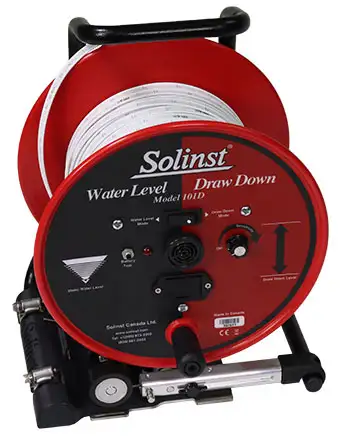
101 Power Winder
The 101 Power Winder provides both convenience and ease of use for all Solinst reel-mounted devices. It is lightweight and easy to attach to small, medium or large size Solinst reels, and is simple to adjust to fit other reels in the market. Effortlessly wind longer tape lengths.
(Image shows 101 Power Winder Installed on Solinst Model 101D Water Level DrawDown Meter)
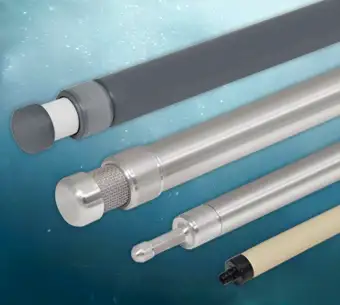
Bladder Pumps with Easy to Replace Bladder Cartridges
Solinst Bladder Pumps now feature Santoprene® bladder cartridges that are quick and easy to replace in the field – no tools required. PVC Bladder Pumps are low cost and excellent for metals sampling and in harsh, corrosive environments.
Related Blog Posts
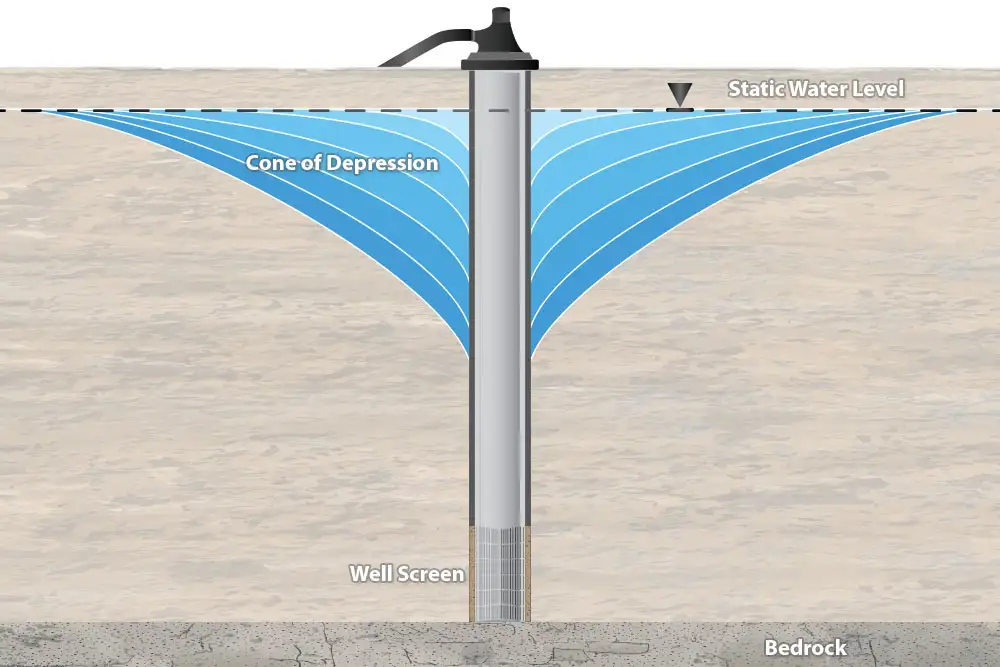
The Importance of Measuring Water Level Drawdown
How Using a Levelogger and 101D Water Level DrawDown Meter Together Provides Essential Data.
What is Drawdown? Drawdown is a change in groundwater level due to an applied stress, caused by events such as: Pumping from a well Pumping from a neighbouring well Intensive water taking from local area Seasonal declines as recharge rates lower....


