
101M Mini Water Level Meter Operating Instructions
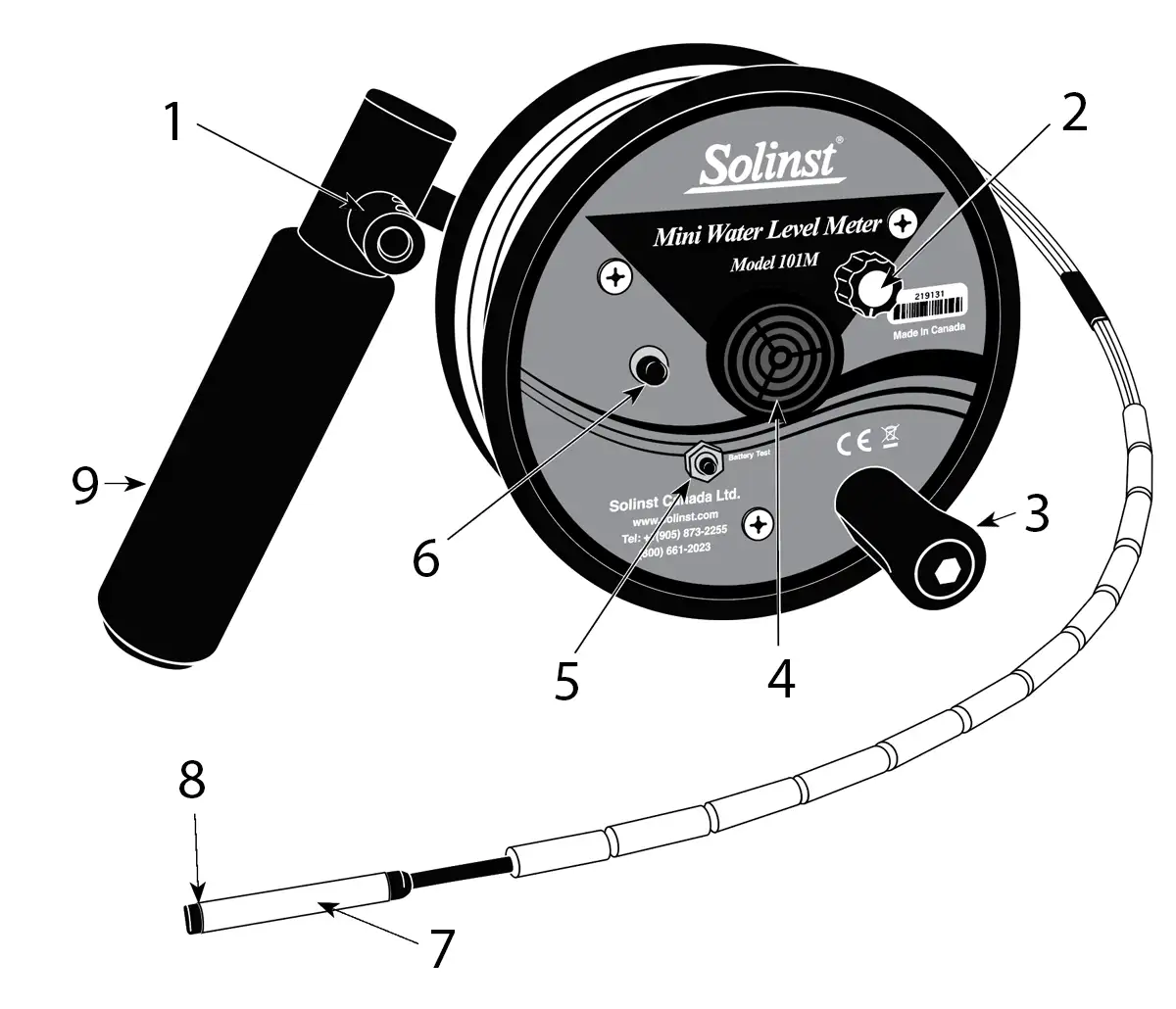
Solinst Model 101M Mini Water Level Meter Components
- Probe Holder
- On/Off Sensitivity Dial
- Winding Handle
- Buzzer (Sonalert)
- Battery Test Button
- LED Light
- P10 Probe (10 mm diameter)
- Zero Point Measurement
- Carry Handle
Water Level Measurements
- Turn the water level meter on. The zero measurement point on the P10 Probe is near the tip.
- Feed the tape into the well. If a tape guide is used, lay the tape onto the groove on the top. Measurements will be read at the point of the V-notch on the tape guide. Remember to deduct 2/10 ft or 6.0 cm.
- The light and buzzer activate when the probe tip enters water. To ensure accuracy, lower and raise the probe a few times and then record the depth measurement from the tape at the top of the well.
Solinst Tape Guide (Optional)
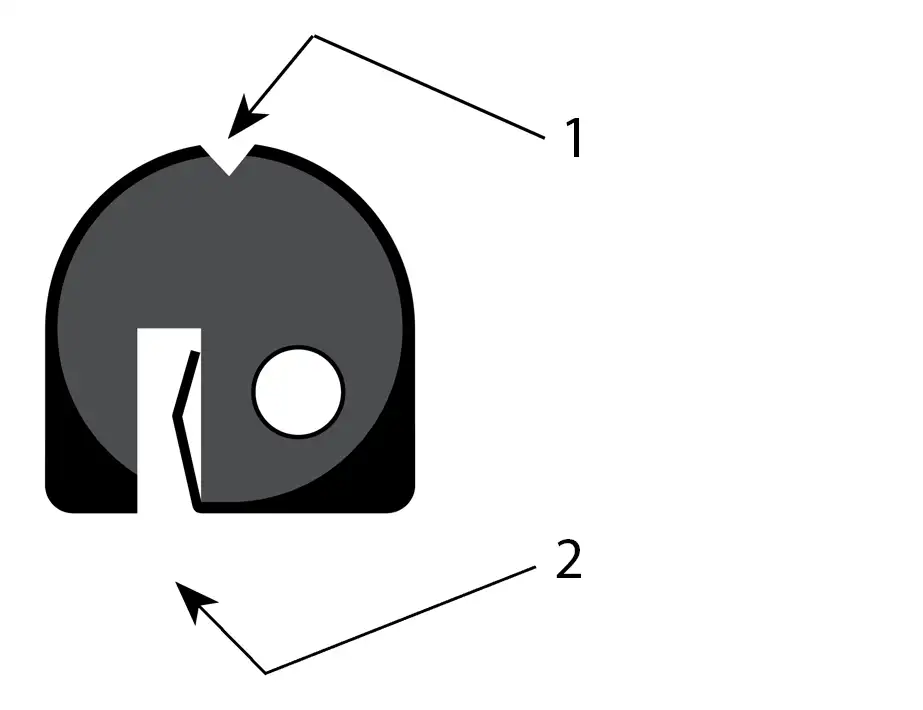
- Measurement point (Deduct 2/10 ft or 6.0 cm)
- Fit onto well casing
Equipment Check
- Turn sensitivity dial fully clockwise.
Notes: 1. Clockwise rotation of sensitivity dial turns meter on and increases sensitivity. - Always set dial to highest sensitivity position, then decrease if necessary.
- Depress the Battery Test button to test the battery and main circuitry.
- Submerge the probe in tap water to test the probe. This completes the circuit and activates the buzzer and light.
Routine Care
- After the depth to water has been recorded, the tape should be carefully rewound onto the reel, the probe wiped dry and placed into the probe holder.
- The probe, weights, tape and reel can be wiped clean with phosphate-free (non-abrasive) detergent and water. Do not submerge the reel.
Replacement Parts
The following parts can be provided should components become lost or damaged.
- Lights, dials, etc.
- Reels
- Replacement tape with probe (complete)
- Weights
Battery Replacement
- Battery type – alkaline, 9 volt.
- The battery is housed within the faceplate of the reel.
- Using a Phillips screwdriver, remove the three screws on the faceplate.
- Carefully remove the faceplate so as not to unwind the tape. Note that there is an elastic band keeping everything together in the faceplate.
- While leaving the elastic band in place, replace the battery.
- Carefully place the faceplate back onto the hub and line up the holes.
Note: Before screwing the faceplate back onto the hub, make sure no wires are outside the hub. - Once the screws have been tightened and the faceplate is secure, test the water level meter.
Troubleshooting
Symptom
Cause
Remedy
No sound when probe immersed in water
Dead battery.
Replace with 9V Alkaline.
No sound when probe immersed in water
Water conductivity is very low.
Increase sensitivity switch setting (turn clockwise) or call Solinst for assistance.
No sound when probe immersed in water
Disconnected wires on circuit board.
Check all connections inside hub of reel for loose/disconnected wires - solder or reconnect.
No sound when probe immersed in water
Broken wire in tape.
Locate break in tape - splice and seal, or replace. (Contact Solinst)
No sound when probe immersed in water
Disconnected wire inside probe.
Contact Solinst to obtain parts/repair instructions.
Instrument continuously sounds after being immersed in water.
Water in probe. Probe may be dirty which could interfere with the circuit connection.
Contact Solinst for instructions to clean or replace
the probe.
Related Products
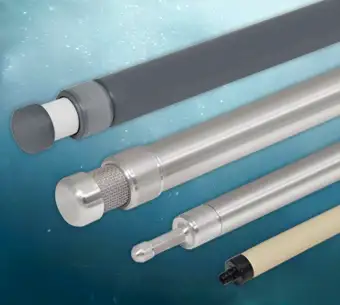
Bladder Pumps with Easy to Replace Bladder Cartridges
Solinst Bladder Pumps now feature Santoprene® bladder cartridges that are quick and easy to replace in the field – no tools required. PVC Bladder Pumps are low cost and excellent for metals sampling and in harsh, corrosive environments.
Related Blog Posts
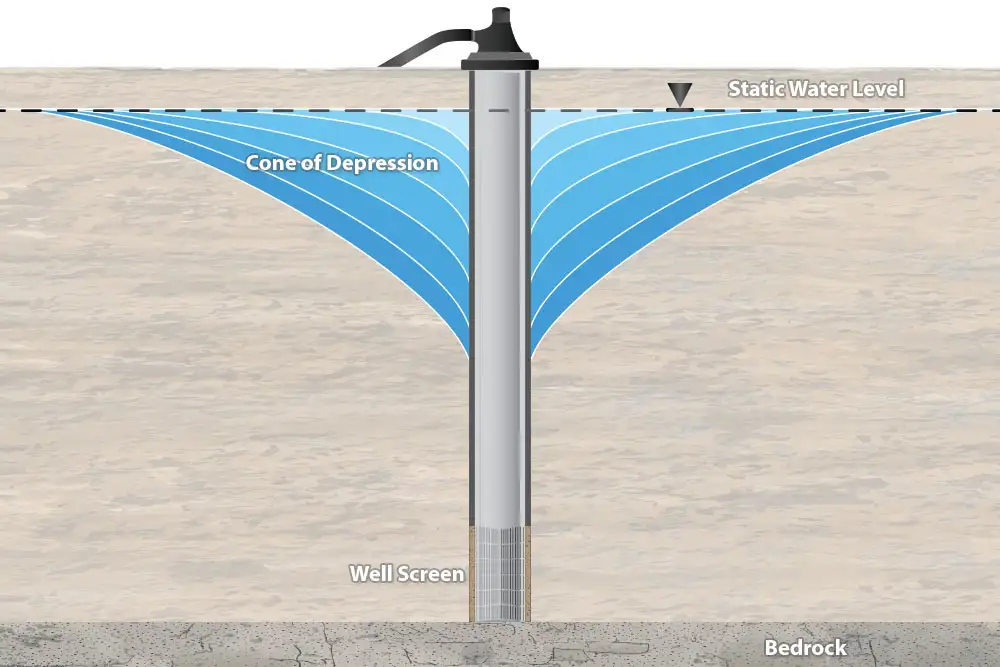
The Importance of Measuring Water Level Drawdown
How Using a Levelogger and 101D Water Level DrawDown Meter Together Provides Essential Data.
What is Drawdown? Drawdown is a change in groundwater level due to an applied stress, caused by events such as: Pumping from a well Pumping from a neighbouring well Intensive water taking from local area Seasonal declines as recharge rates lower....


