

Model 3001 Levelogger 5

Great News for Our Customers in the United Kingdom and Ireland!
Free shipping on all orders placed with Solinst UK Ltd
from now until May 29, 2026.
FREE SHIPPING OFFER >
5 : More Than a Number
Levelogger 5 is Much More
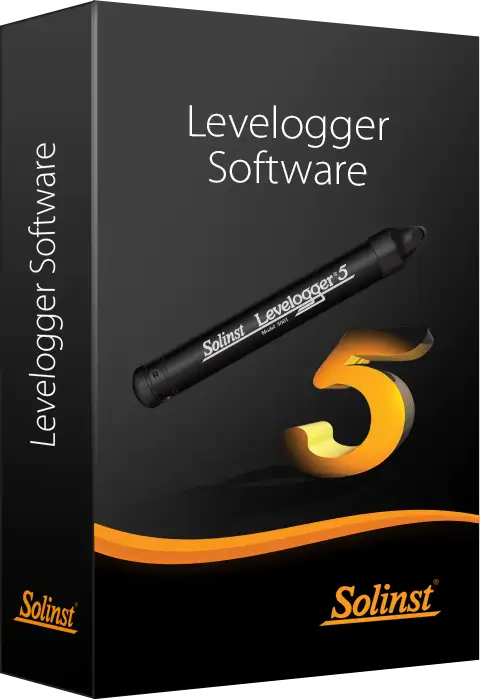
Solinst Levelogger 5 — the 5th generation Levelogger brings over 25 years of engineering and design experience with it. Everything about the new Levelogger 5 design focuses on providing high-quality water level data our customers can rely on, with all of the accuracy and ease of use expected from Solinst.
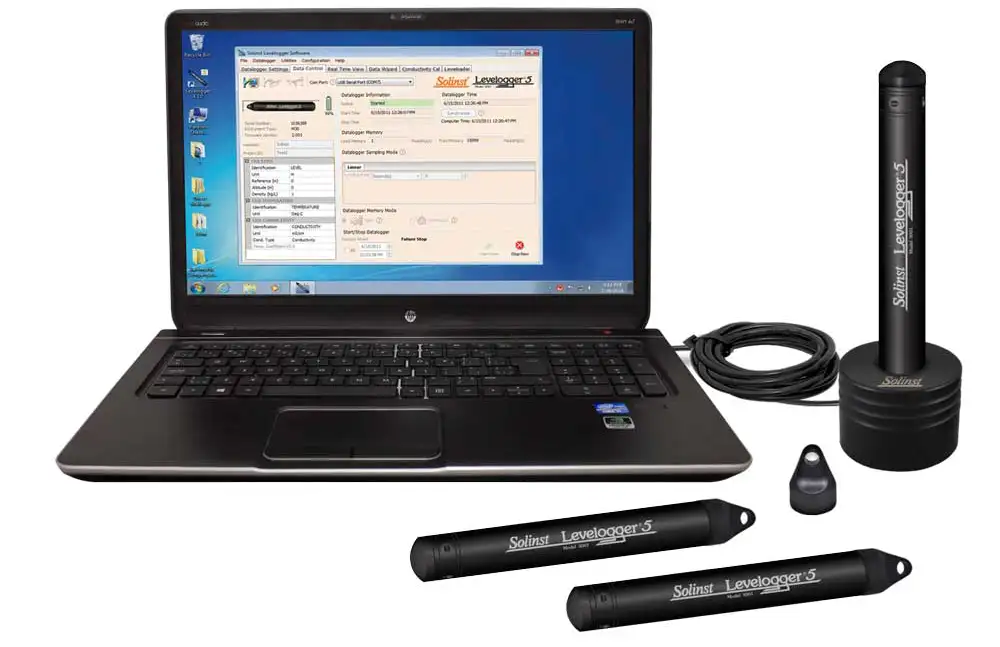
The Levelogger 5 is a self contained water level datalogger, using infra-red data transfer powered by a 10 year lithium battery, offering the flexibility of installing by use of a Direct Read Cable, wireline or Kevlar cord. The Levelogger 5 has a memory capacity of 150,000 temperature and water level data points.
Not Your Average Datalogger
- 25 Years of engineering innovation
- Decades of customer experience
- Deployed in 100+ countries
- Thousands of customers
- Millions of data points
- Countless applications
- Unlimited premium customer support
Our Constant Drive for Perfection
- Accurate and reliable temperature compensated water level data
- Optical communication interface with improved datalogger connectivity
- Durable double sealed construction using high-grade 316 stainless steel with PFAS Free corrosion-resistant coating
- Optimized high-speed optical communication interface with backwards compatible adaptors to work with 3rd and 4th generation Leveloggers
- Increased memory capacity and faster thermal response times
Quick Access to Data In The Field
- SRU (Solinst Readout Unit) provides instant access to compensated water level data.
- Levelogger App Interface allows you to program, and download in the field using your smart device
- DataGrabber gives you simple data downloading to your USB in the field, leaving down-hole logger undisturbed
- Forward & Backward Compatibility
- Adaptors connect new Leveloggers to your existing direct read cables and accessories
- Want to connect a previous model Levelogger to a new Solinst accessory? We have an adaptor for that too.
Levelogger Software Version 4.7, written to support the Levelogger 5, Levelogger 5 Junior,
Levelogger 5 LTC, Rainlogger 5, and is backwards compatible to support the Levelogger Edge series. Version 4.6 offers many features, including the ability to barometrically compensate multiple Levelogger data files simultaneously.
What is a Water Level Datalogger?
A water level datalogger is an instrument that automatically and continuously records fluctuations in water level. Water level data logs are stored in the datalogger’s memory and can be downloaded using software, or can be collected by other means such as a smart device app, telemetry, or data acquisition system.
Many water level dataloggers use a pressure sensor to measure water pressure above the water level datalogger zero measurement point. Water pressure readings can then be converted to water level equivalent measurements. Solinst offers both absolute and vented (gauged) pressure sensor water level dataloggers. An absolute water level datalogger measures both water and atmospheric pressure; therefore water level data needs to be barometrically compensated. A vented water level datalogger is vented to the atmosphere and only measures water pressure.
Typically, water level dataloggers are programmed, stopped, started and set to record at a specific interval using a software program. Solinst water level dataloggers can be set to record water levels as often as 1/8 of a second. A water level datalogger is an alternative to using a water level meter, which requires personnel to manually measure and record water levels. As such, water level dataloggers are ideal for long-term, uninterrupted water level monitoring and for short-term hydrogeological studies that require a high frequency of water level recordings.
Solinst water level dataloggers also record water temperature; in addition, the Levelogger 5 LTC records conductivity. Solinst water level dataloggers are compact instruments and combine the pressure sensor, temperature sensor, conductivity sensor, memory, and long-lasting battery in one durable housing.
All-in-one water level dataloggers make deployment easy. Solinst provides the option of deploying via simple wireline/rope or using direct read cables to allow communication while the datalogger is installed and logging (vented water level loggers are deployed using vented communication cables). Water level dataloggers can be used to measure groundwater levels, as well as surface water levels in rivers, streams, lakes, oceans, etc.
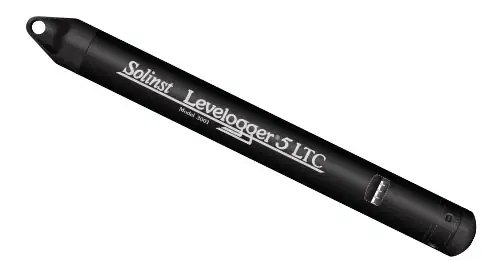
- Conductivity, water level and temperature datalogging
- Full range 0-80,000 S/cm
- Ideal for salinity and saltwater intrusion studies, tracer tests, agricultural and stormwater run-off monitoring
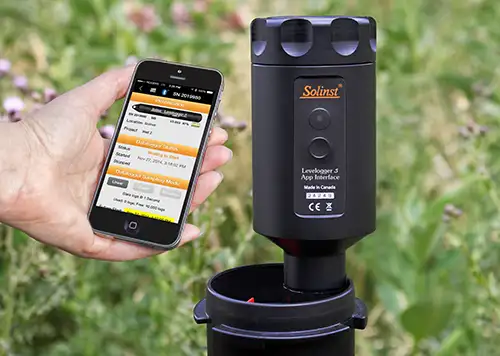
- Creates a wireless connection between your Levelogger and smart device running the Solinst Levelogger App
- Program your Leveloggers to record, or view and save real-time readeings
- Download and view data collected by your Levelogger and e-mail it from your smart device
Related Blog Posts
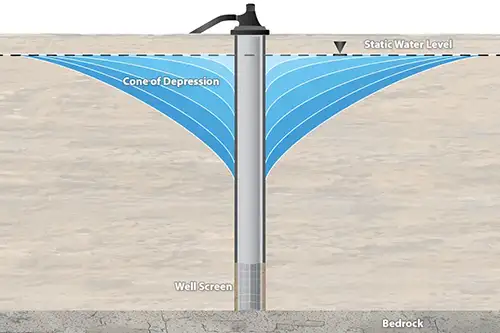
The Importance of Measuring Drawdown
How Using a Levelogger and 101D Water Level DrawDown Meter Together Provides Essential Data What is Drawdown? Drawdown is a change in groundwater level due to an applied stress, caused by events such as: Pumping from a well Pumping from a neighbouring well Intensive water taking from local area Seasonal declines as recharge rates lower How is Drawdown Measured?
Related Products
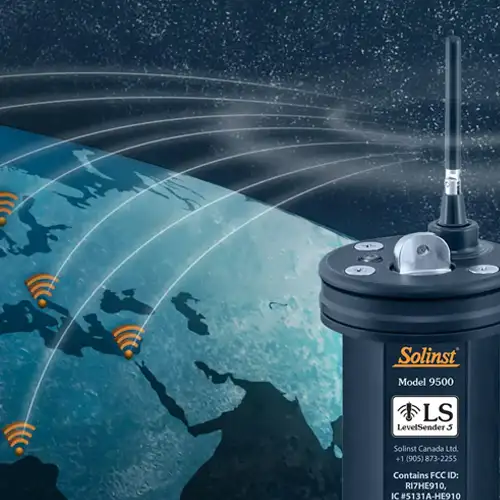
Plug and Play Telemetry
Already own Leveloggers? Quickly and easily upgrade your monitoring wells with LevelSender Telemetry. The 4G LevelSender 5 telemetry system features an optional Solinst SIM card. It is set up for you in advance—with a low-cost plan managed by Solinst! An internal barometer provides automatically compensated water level readings; set high/low level alarms.
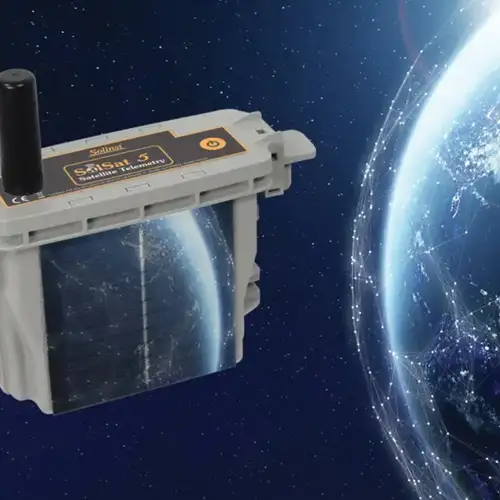
Discover Anywhere Monitoring
SolSat 5 is a telemetry system that leverages Iridium satellite technology to provide global connectivity for Solinst 5 Series dataloggers. It uses low cost TextAnywhere global satellite messaging to send remote data to a secure web portal. It features a robust weatherproof enclosure for installation almost anywhere. Features built-in Wi-Fi setup app, solar panel, and barometer.
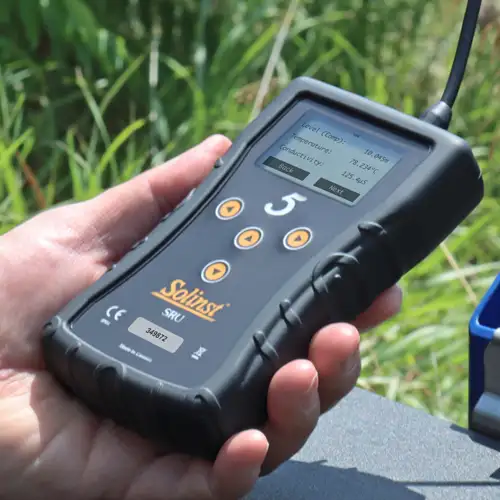
Solinst Readout Unit (SRU)
The Solinst Readout Unit (SRU) is a rugged, handheld device designed to connect to a deployed Solinst datalogger and display instant water level readings – with the option of automatic barometric compensation. Real-time logging and downloaded data can be saved and transferred to a PC. Quickly check the datalogger's status.
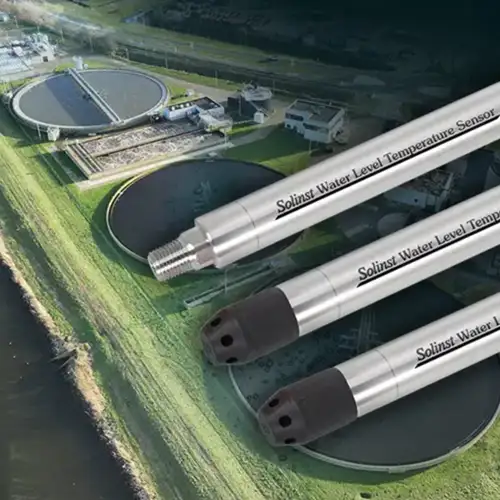
Versatile Submersible Water Level Transmitter
The 301 Water Level Temperature Sensor provides the option of highly accurate water level transmission using multiple protocols – MODBUS, SDI-12 and 4-20mA – for a wide variety of applications. This compact, all-in-one submersible hydrostatic level transmitter provides continuous, stable water level and temperature readings, with options for absolute and gauged pressure sensors.
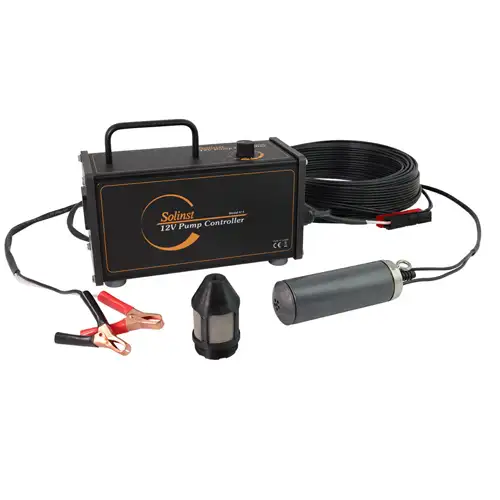
415 12V Submersible Pump
The Solinst 12V Submersible Pump provides an efficient means of purging and obtaining groundwater samples from 2" OD monitoring wells. The compact pump can sample from depths of 36.5 m (120 ft) below ground surface, and is easy to adjust the flow rates up to 13.5 L/min (3.6 US gpm) in shallower applications.


